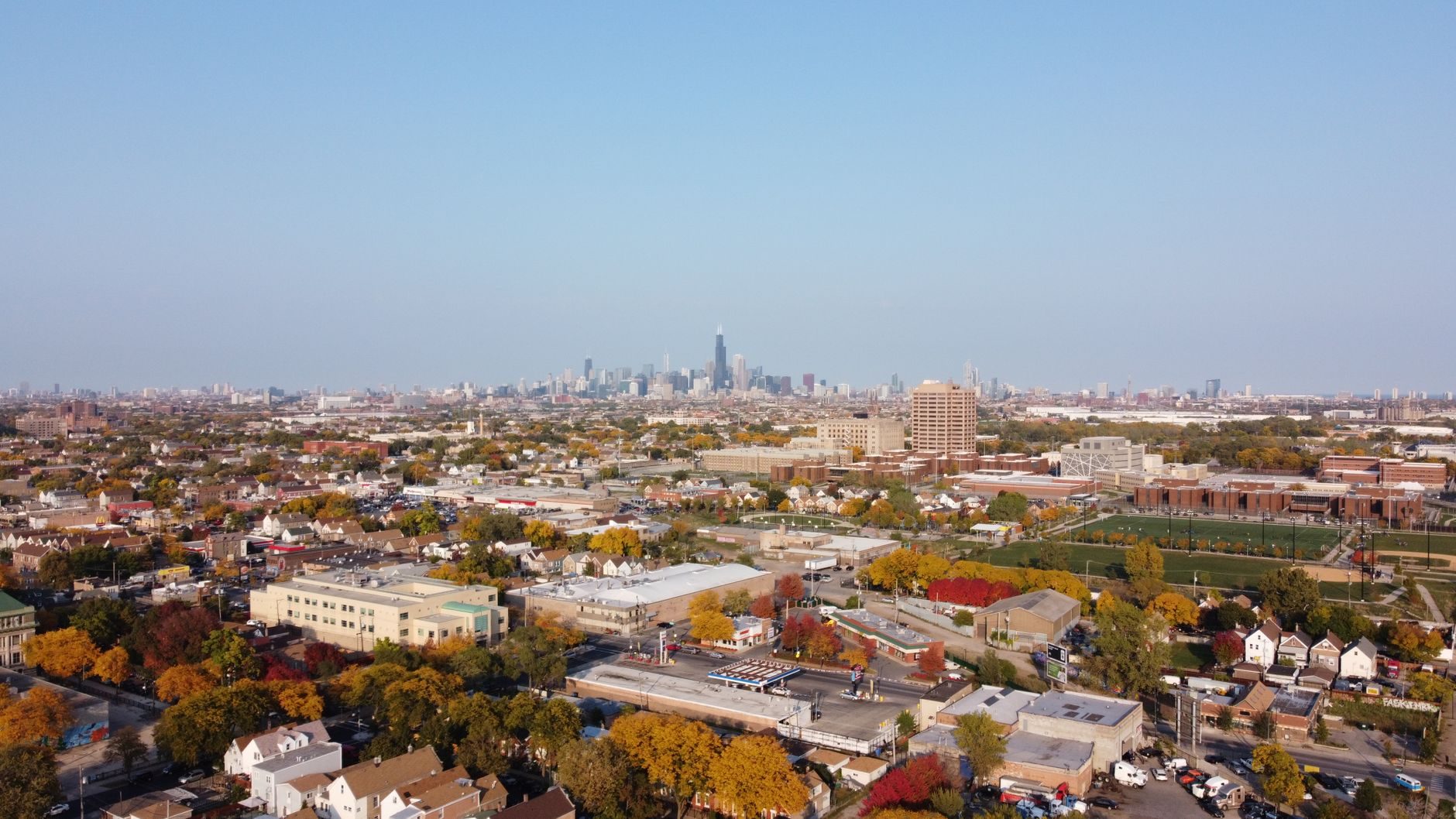
Pullman · Cook County · IL
Homes for sale in
Pullman.
- Active listings
- 2
- Median list
- $193K
- Avg time on market
- 170 days
- Sold · last year
- 47
Active listings
2 homes on the market


Beat the rest of the buyers
Be the first to know when a new Pullman home hits the market
Save the search and you will get a text and an email the moment a new listing matches. Most Pullman homes go under contract in the first week, the buyers who win are the ones who saw it first.
About the community
Living in Pullman.
Pullman is Community Area 50 of Chicago, on the city's far South Side about 12 to 14 miles south of the Loop, just west of Lake Calumet in Cook County. The community area spans roughly 2.11 square miles and is bounded by 103rd Street to the north, 115th Street to the south, the Illinois Central Railroad tracks to the east, and Cottage Grove Avenue to the west. The neighborhood takes its name from George Pullman, the industrialist who commissioned architect Solon Spencer Beman and landscape architect Nathan Barrett to design a complete planned company town, beginning construction in 1880 to house workers of his Pullman Palace Car Company. By 1883 the community's population had reached roughly 8,000, making it one of the most ambitious exercises in American industrial urban planning of its era. The distinctive housing stock, built primarily as red brick Queen Anne rowhouses with indoor plumbing and gas service, was a marked improvement over the tenement conditions workers had previously endured. In 1894, following wage cuts during the Panic of 1893 without corresponding rent reductions, Pullman workers walked off the job in what became the landmark Pullman Strike, a national labor crisis led by Eugene Debs and the American Railway Union that ultimately required federal intervention. After George Pullman's death in 1897, the Illinois Supreme Court ordered the company to divest its non-industrial real estate, and most of the housing had been sold to residents by 1907. The neighborhood was listed on the National Register of Historic Places in 1969 and designated a Chicago Landmark in 1972, and in 2015 President Obama made it a national monument, later elevated to Pullman National Historical Park in 2022. For buyers who want an affordable Chicago neighborhood with genuine historic character, walkable brick rowhouse architecture, and a national park outside their door, Pullman has few comparisons anywhere in the country.
At a glance
National Historical Park
Pullman National Historical Park, redesignated in December 2022, is the first and only National Park Service unit in the city of Chicago, anchored at the Administration and Clock Tower building visitor center.
Planned industrial town
Built between 1880 and 1884 by George Pullman and designed by architect Solon Spencer Beman with landscape architect Nathan Barrett, Pullman was one of America's first comprehensively planned industrial communities.
Rowhouse capital
Roughly 44 percent of residential property in Pullman is classified as rowhouses or attached homes, a concentration higher than 98 percent of U.S. neighborhoods, and nearly 60 percent of homes were built no later than 1939.
Population
Pullman had 6,820 residents as of the 2020 Census, spread across 2.11 square miles on the far South Side in Cook County.
Metra Electric access
The neighborhood is served by two Metra Electric District stations, 111th Street and 115th Street Kensington, with the 111th Street stop about 14 miles from Millennium Station downtown.
Affordable home prices
Median home prices in Pullman ran roughly $169,000 to $180,000 in 2025 and 2026, among the most affordable historic districts of any major U.S. city.
Landmark buildings
Hotel Florence, built in 1881 and named for George Pullman's daughter, the Administration and Clock Tower building now serving as the NPS visitor center, and the 1882 Greenstone Church anchor the historic district.
CPS schools
Pullman falls within Chicago Public Schools, with zoned elementary options including Pullman, Smith, and Poe schools, and most of the area zoned to Corliss High School.
What it’s actually like to live here
Owning a home in Pullman means living inside one of the most intact 19th-century industrial neighborhoods in America, with nearly every original rowhouse on the block still standing. The residential core runs between 103rd and 115th Streets, where the red brick Queen Anne facades, uniform cornice lines, front stoops, and tree-lined streets create a scale and visual continuity rarely found in any major American city. Roughly 44 percent of the neighborhood's housing is classified as rowhouses or attached homes, and nearly 60 percent of those homes date to 1939 or earlier. The Chicago Landmark designation and city historic district guidelines, administered through the Beman Committee of the Pullman Civic Organization, set standards for exterior renovation, so the streetscape is actively protected from incompatible alterations. The Friends of Pullman operate exhibits and walking tours, and the A. Philip Randolph Pullman Porter Museum tells the story of the Brotherhood of Sleeping Car Porters and African American labor history. Residents describe a block-club culture where neighbors know one another and community-led restoration projects are common.
Pullman is served by two Metra Electric District stations, the 111th Street station at Cottage Grove Avenue, about 14 miles from Millennium Station in the Loop, and the 115th Street Kensington station, where most suburban express trains stop. A high share of residents commute by train, reflecting the long tradition of Metra Electric as the spine of South Side transit. The median home price in early 2026 was around $169,000, making Pullman one of the most affordable neighborhoods in Chicago for buyers who want historic brick construction, large rooms, and a recognized preservation district. Everyday needs are served by nearby commercial corridors in Roseland and Kensington, and Olive-Harvey College, a City Colleges of Chicago campus, sits within the community area. Vacant properties remain a feature of the neighborhood, and buyers willing to invest in restoration can find opportunities that simply do not exist in more expensive Chicago neighborhoods.
Around town
What there is to do in Pullman.
A handful of the places people who live here actually use. Not a directory.
- History
Pullman National Historical Park Visitor Center
The restored Administration and Clock Tower building, opened on Labor Day 2021, houses National Park Service exhibits and ranger-led tours of the planned industrial community and the 1894 strike.
- History
Hotel Florence
The 1881 Queen Anne inn, named for George Pullman's daughter, is part of the Pullman state historic site and was one of the finest hotels in the region at the time of its construction.
- Culture
Greenstone United Methodist Church
Designed by Solon Spencer Beman in 1882 using distinctive green serpentine stone, this working church retains its original cherry interior, historic pews, and a rare manually operated pipe organ.
- History
Friends of Pullman Walking Tours
Guided walking tours of the historic district run on the first Sunday of each month from May through October, covering the exteriors of the surviving 1880s rowhouses and public buildings.
- Culture
A. Philip Randolph Pullman Porter Museum
Located on South Maryland Avenue within the historic district, this museum is dedicated to African American labor history, the Brotherhood of Sleeping Car Porters, and the Great Migration.
- Parks
Arcade Park
Green space donated by George Pullman as part of the original company town's civic amenities, Arcade Park remains a neighborhood gathering point within the historic district.
By the numbers
Pullman taxes + market stats.
Property tax rates vary by exact township and assessor district. Confirm per address before pricing a purchase.
Median sold price
$190,000
MRED · last 12 mo (47 sales)
How Pullman got here
A bit of history.
George Pullman, founder of the Pullman Palace Car Company and inventor of the railroad sleeping car, purchased thousands of acres south of Chicago in the late 1870s between the Illinois Central Railroad line and Lake Calumet to build a fully self-contained industrial community. He commissioned architect Solon Spencer Beman and landscape architect Nathan Barrett to design the town from scratch, and construction began in 1880. By 1883 the population had climbed to around 8,000. Beman designed more than 1,300 worker housing units as red brick rowhouses, predominantly in the Queen Anne style with Romanesque details, each furnished with indoor plumbing and gas service, amenities almost unheard of for working-class housing of that era. The town also included Hotel Florence, the Greenstone Church, a market arcade, a library, and a park, all arranged in a planned grid. Rents were deducted directly from workers' paychecks and set to return a profit to the company. Despite its outward appearance as a model community, Pullman maintained strict social controls, and the town was celebrated at the 1893 World's Columbian Exposition as an example of enlightened industrial planning.
The Panic of 1893 devastated the railroad industry, and demand for Pullman cars collapsed. The company cut wages but did not reduce rents, which were automatically deducted from already-shrunken paychecks. In May 1894, Pullman workers walked off the job, and Eugene Debs and the American Railway Union launched a national boycott of trains carrying Pullman cars, paralyzing rail traffic across the country. The federal government sought an injunction and deployed U.S. Marshals and Army troops to Chicago, and clashes left dozens dead or injured before the strike was broken. The U.S. Supreme Court upheld the injunctions in In re Debs in 1895, establishing a precedent for federal intervention in labor disputes, and President Cleveland signed legislation creating Labor Day as a federal holiday that same year. After George Pullman died in 1897, the Illinois Supreme Court ruled that operating a town exceeded the company's charter and ordered the sale of non-industrial property to residents, with most homes sold by 1907. A 1960 demolition proposal galvanized residents to form the Pullman Civic Organization, which lobbied successfully for preservation, leading to National Register listing in 1969, National Historic Landmark District status in 1970, and Chicago Landmark designation in 1972, and ultimately to the national monument designation in 2015 and the national historical park redesignation in 2022.
The questions buyers actually ask
Pullman FAQ
The questions I get most from buyers shopping Pullman. If yours isn't here, text 224-385-8779, same-day reply.
- What is it like to own a landmarked historic home in Pullman, and are there restrictions?
- Pullman's historic core is both a Chicago Landmark District and part of a National Historic Landmark District. The City of Chicago administers exterior renovation guidelines through the Beman Committee, named for the original architect. These guidelines generally cover alterations to the front facade, windows, and roofline visible from public streets, while interiors and rear additions are typically handled under standard city building codes. The practical effect is that the streetscape stays intact, which protects property values and the neighborhood character that attracted you in the first place.
- What schools serve the Pullman neighborhood?
- Pullman is part of Chicago Public Schools. Zoned elementary schools include George Pullman Elementary, Wendell Smith Elementary, and Edgar Allan Poe Classical School, a magnet program with an accelerated liberal arts curriculum. Most of the community area is zoned to Corliss High School. Olive-Harvey College, a City Colleges of Chicago campus, is also located within the community area.
- How do residents commute downtown, and how long does it take?
- The Metra Electric District is the primary commuter rail option, with the 111th Street Pullman station about 14 miles from Millennium Station in the Loop, and most suburban express trains stopping at the 115th Street Kensington station. A high share of Pullman residents ride the train to work, well above the national average. CTA bus routes also serve the area.
- What are home prices like in Pullman right now?
- As of 2025 and 2026, the median sale price for homes in Pullman was roughly $169,000 to $180,000, one of the lowest price points for a historic-district neighborhood in any major U.S. city. Buyers are acquiring original 1880s brick rowhouses at prices that would be impossible in comparable historic districts in Chicago's North Side or in peer cities, though some properties need restoration.
- What is the difference between Pullman and West Pullman?
- Pullman, Community Area 50, and West Pullman, Community Area 53, are adjacent but separate official Chicago community areas with distinct histories. Historic Pullman, the national park, the rowhouses, Hotel Florence, and the planned company town grid, sits in Community Area 50 east of Cottage Grove Avenue between 103rd and 115th Streets. West Pullman is a separate, larger residential neighborhood to the west that historically drew workers who moved just outside the company town to escape Pullman's strict rules and high rents.
- What does having a National Historical Park in the neighborhood mean for residents?
- The vast majority of homes in the historic district remain private residences, and National Park Service ownership covers specific buildings, primarily the Administration and Clock Tower visitor center and adjacent grounds, along with the state-managed Hotel Florence and factory complex. Residents are not subject to NPS jurisdiction over their private property. The practical benefits include federal investment in nearby public infrastructure, a steady stream of visitors who support local businesses, and a surrounding streetscape that is actively maintained.
- Who is the real estate agent for Pullman?
- Joe Keegan is the local licensed Illinois real estate broker who covers Pullman in Pullman, IL through Subdiview, a neighborhood-first home search for the Chicago suburbs and collar counties. Joe prices and negotiates from the live MRED sold comps for Pullman specifically, not national averages, and can help you buy or sell here. Reach Joe at 224-385-8779 or joe@joekeeganhomes.com.
Nearby
Neighborhoods near Pullman.
If you’re cross-shopping the area, these are the neighborhoods right next to Pullman.
Your local agent
Joe knows Pullman
Most agents will list anything. I focus on the places I actually know, and the things that move value here don't show up in the MLS write-up: which streets and buildings hold demand, what the HOA or assessments really cover, how the comps read once you account for condition and location, and where buyers consistently want to be.
When you're ready to tour or list, you want someone who has read the last 50 closed comps in this specific market, not a national average, and can tell you what they actually mean for your price. That's how I work. Text or call any time, and I'll give you a real take, not a brochure.
- Licensed Illinois broker
- Comp-driven pricing
- Pullman specialist
- Honest local market take
- Brokerocity
Thinking of selling?
What's your home actually worth?
Not a Zestimate. A real CMA from someone who's sold this neighborhood, knows the floor plan premiums, and can tell you which upgrades the buyer pool here actually pays for.
- Pricing range with comp-by-comp logic
- Pre-list improvements that pay back, and the ones that don't
- No obligation, no spam, no auto-dialer