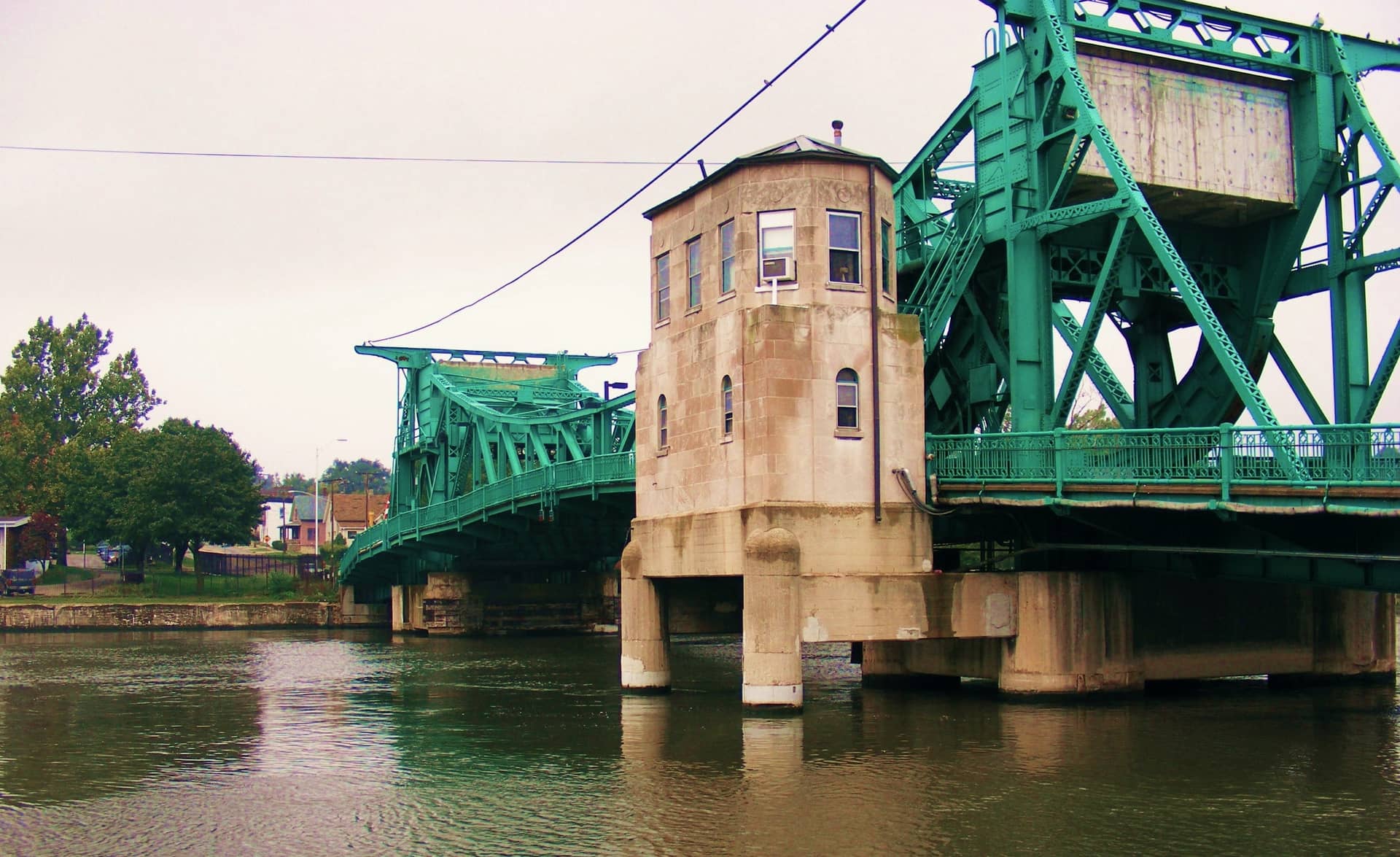
Joliet · Will County · IL
Homes for sale in
Joliet.
- Active listings
- 200
- Median list
- $299K
- Avg time on market
- 16 days
- Sold · last year
- 458
Active listings
200 homes on the market


Be the first to know when a new Joliet home hits the market
Text + email the moment a new listing matches.
About the community
Living in Joliet.
Joliet sits about 40 miles southwest of Chicago on both banks of the Des Plaines River, serving as the county seat of Will County, with a small slice in Kendall County. With roughly 150,000 residents it is the third-largest city in Illinois and one of the fastest growing in the Chicago metro. Founded in the 1830s and named for French-Canadian explorer Louis Jolliet, the city built its identity on limestone, steel, the Illinois and Michigan Canal, and the railroads, earning the nickname Stone City. Today buyers come for relative affordability versus the inner suburbs, a deep stock of historic and new-construction homes, two Metra commuter lines plus Amtrak into the Loop, and a downtown that has been steadily reinvesting around the landmark Rialto Square Theatre, the riverwalk, and the casino district.
At a glance
Illinois' third-largest city
About 150,445 residents, the county seat of Will County with a small portion in Kendall County.
District 86 and District 204
Served primarily by Joliet Public Schools District 86 (K-8) and Joliet Township High School District 204 (Joliet Central and Joliet West).
Two Metra lines plus Amtrak
Joliet Gateway Center is the terminus of Metra's Rock Island District and Heritage Corridor lines, plus an Amtrak stop.
I-80 at I-55
Two interstates cross near the city, joined by US 6, US 30, and US 52, making Joliet a regional crossroads.
Relative affordability
The typical Joliet home is valued around $256,000, below the inner-ring suburbs.
Median income near $92,000
Median household income is about $92,201, above the national figure.
Rialto Square Theatre
A 1926 movie palace nicknamed the Jewel of Joliet anchors the downtown entertainment core.
Big-league entertainment
Home to Chicagoland Speedway, the Joliet Slammers, two casinos, and the historic Old Joliet Prison.
What’s close
Joliet anchors the southwest corner of the Chicago metropolitan area, straddling the Des Plaines River about 40 miles from the Loop and built around the historic Illinois and Michigan Canal corridor.
- County
- Will County (county seat), with a small portion extending into Kendall County.
- Region
- Southwest suburban Chicago metro, roughly 40 miles southwest of downtown Chicago.
- ZIP codes
- Primary city ZIP codes include 60431, 60432, 60433, 60435, and 60436.
- Highways
- Interstate 80 and Interstate 55, plus US 6, US 30, and US 52.
- Waterways
- Sits on both banks of the Des Plaines River and was a principal port on the Illinois and Michigan Canal.
- Area
- About 65.8 square miles in total, of which roughly 65.1 square miles is land.
What it’s actually like to live here
Living in Joliet means a genuine small-city feel inside the Chicago metro, more affordable and more grounded than the polished inner suburbs. Neighborhoods range from stately historic districts with limestone and brick homes near downtown to sprawling newer subdivisions on the west and south sides, giving buyers a wide spread of prices and styles. Downtown has been the focus of sustained revitalization centered on the dazzling 1926 Rialto Square Theatre, the Des Plaines riverwalk, the Joliet Area Historical Museum and Route 66 Welcome Center, and Harrah's casino, anchoring a walkable core with theater, dining, and riverfront events.
Beyond downtown, the Joliet Park District maintains a deep bench of green space, headlined by the 640-plus acre Pilcher Park with its nature center, trails, and the historic Bird Haven Greenhouse. Sports and entertainment run large here, from the Joliet Slammers minor-league baseball team at Joliet Route 66 Stadium to Chicagoland Speedway and the adjacent Route 66 Raceway. For commuters, Joliet is a true transit hub: two Metra lines and Amtrak run out of the Gateway Center into Chicago, making it a practical base for households that want big-city access without big-city housing costs.
Neighborhoods
Joliet neighborhoods
6 neighborhoods in Joliet, each with its own page covering market stats, schools, and what the buyers there are optimizing for. Featured neighborhoods have hand-curated content; the rest auto- update from MRED listing data.
Cedar Creek
Newer D.R. Horton single-family homes in southwest Joliet, move-in ready with smart-home features, quick access to I-80, and an attainable price for new construction.
3 active~$381,990FeaturedNeufairfield
A D.R. Horton master-plan on Joliet's southeast side: townhomes and single-family homes, ponds and parks, and new construction still selling alongside established resales.
6 active~$282,500FeaturedPrairie Landing
A brand-new D.R. Horton single-family community on the west side of Joliet, with ranch and two-story plans, a neighborhood park, and the Plainfield 202 attendance area.
9 active~$474,990FeaturedSilver Leaf
A mixed-density southwest Joliet subdivision built from the mid-2000s into 2021, with its own Joliet Park District park, a Troy 30-C elementary three tenths of a mile away, and I-80 under a mile out.
4 active~$284,950FeaturedTwin Oaks
A mid-1960s northwest Joliet neighborhood of quarter-acre to half-acre lots, canopy trees, and a 1964-vintage homeowners association that runs on forty dollars a year and an owner-occupancy covenant.
5 active~$485,000FeaturedWaterford Pointe
A gated enclave of about 180 maintained homes off Route 59 on Joliet's far west side, with lawn care and snow removal included, streets named for Waterford crystal patterns, and a park at the north edge.
1 active~$299,800Featured
This representation is based in whole or in part on data supplied by Midwest Real Estate Data, LLC for the period October 22, 2025 through October 22, 2026. Midwest Real Estate Data, LLC does not guarantee nor is it in any way responsible for its accuracy. Data maintained by Midwest Real Estate Data LLC may not reflect all real estate activity in the market.
Schools
Districts serving Joliet.
Boundary lines do shift. Always confirm in writing for a specific address before writing an offer.
- D86Grades PreK-8
Joliet Public Schools District 86
Schools serving the area
- Edna Keith Elementary School
- Thomas Jefferson Elementary School
- Taft Elementary School
- Gompers Junior High School
District 86 serves central Joliet plus Ingalls Park, Ridgewood, and portions of Preston Heights and Rockdale, about 9,300 students across roughly 21 schools, the third-largest elementary district in Illinois. Growth areas may fall in other districts, confirm by address.
- D204Grades 9-12
Joliet Township High School District 204
Schools serving the area
- Joliet Central High School
- Joliet West High School
The high-school district for the Joliet area. Feeder elementary districts include Joliet PSD 86, Rockdale 84, Troy 30-C, and Elwood 203. Some growth areas fall into Plainfield 202 or Laraway 70-C, so verify by address.
Homes by school
Homes for sale by school in Joliet
Homes in the Plainfield Central HS district
Plainfield Community Consolidated School District 202
Homes in the Joliet West HS district
Joliet Township High School District 204
Homes in the Joliet Central HS district
Joliet Township High School District 204
Homes in the Plainfield North district
Plainfield Community Consolidated School District 202
Homes in the Plainfield South HS district
Plainfield Community Consolidated School District 202
Homes in the Plainfield East HS district
Plainfield Community Consolidated School District 202
Homes in the Minooka HS district
Minooka Community High School District 111
Around town
What there is to do in Joliet.
A handful of the places people who live here actually use. Not a directory.
- Culture
Rialto Square Theatre
A 1926 vaudeville-era movie palace nicknamed the Jewel of Joliet, on the National Register of Historic Places, hosting concerts, tours, and shows.
- Family
Chicagoland Speedway
A motorsports complex on the city's edge that, with the adjacent Route 66 Raceway drag strip and oval, has hosted national racing events.
- Family
Joliet Slammers at Joliet Route 66 Stadium
Independent Frontier League minor-league baseball played downtown at the former Silver Cross Field, an affordable family night out.
- Parks
Pilcher Park and Bird Haven Greenhouse
Over 640 acres of woods, trails, a nature center, and the historic Bird Haven Greenhouse and horticultural center run by the Joliet Park District.
- Culture
Joliet Area Historical Museum and Route 66 Welcome Center
Housed in a 1909 church at 204 N. Ottawa Street, with a Route 66 experience, an I&M Canal replica, and local history exhibits.
- Food & Drink
Harrah's Joliet Casino and Hotel
A downtown riverfront casino and hotel with dining and gaming, one of two Des Plaines River casinos in the city.
Getting around
Commute + transit from Joliet.
- Stations: Joliet Gateway Center
- Terminal: Chicago LaSalle Street / Union Station
- Distance: 40 miles to downtown Chicago
- Routes: I-80 · I-55 · US 6 · US 30 · US 52 · IL 53
- Naperville: ~28 min
- O'Hare Airport: ~50 min
- Chicago Loop: ~55 min
By the numbers
Joliet taxes + market stats.
Property tax rates vary by exact township and assessor district. Confirm per address before pricing a purchase.
Property tax rate
2.65%
effective avg
Sales tax
9.00%
combined
Median sold price
$295,000
MRED · last 12 mo (458 sales)
Median household income
$92,201
ACS
How Joliet got here
A bit of history.
French-Canadian explorer Louis Jolliet and Father Jacques Marquette paddled up the Des Plaines River and camped near the site in 1673. The town itself was founded in 1833 by settler Charles Reed and originally platted as Juliet, before being renamed in 1845 to honor Jolliet. Joliet rose on limestone, quarried so extensively that it became known as Stone City, and its stone went into landmarks across the Midwest. The opening of the Illinois and Michigan Canal in 1848 and the arrival of the Rock Island Railroad in 1852 turned Joliet into a major industrial and shipping center, a principal port on the canal linking the Great Lakes to the Mississippi watershed.
Industry defined the next century. Steel and wire mills, the completion of the Chicago Sanitary and Ship Canal in 1900, and abundant rail made Joliet a manufacturing powerhouse. In 1858 the state completed the Joliet Correctional Center, a limestone-walled prison that became the largest in Illinois and later a pop-culture icon through the opening of the 1980 film The Blues Brothers. As heavy industry declined late in the 20th century, Joliet reinvented itself: riverboat gambling arrived in the 1990s with Harrah's downtown and the Hollywood Casino to the southwest, Chicagoland Speedway opened in 2001, and ongoing downtown revitalization around the 1926 Rialto Square Theatre and the Des Plaines riverwalk has reanimated the historic core.
The questions buyers actually ask
Joliet FAQ
The questions I get most from buyers shopping Joliet. If yours isn't here, text 224-385-8779, same-day reply.
- What schools serve Joliet?
- Most of Joliet is served by Joliet Public Schools District 86 for grades K-8 (about 9,300 students, the third-largest elementary district in Illinois) and Joliet Township High School District 204 for high school, which operates Joliet Central and Joliet West. Some neighborhoods and newer growth areas fall into other districts such as Plainfield 202 or Troy 30-C, so always confirm by address.
- How is the commute to Chicago from Joliet?
- Joliet is a strong commuter base. The Joliet Gateway Center is the terminus of two Metra lines, the Rock Island District (about 40 miles to LaSalle Street Station) and the rush-hour Heritage Corridor (about 1 hour 7 minutes to Union Station), and it is also an Amtrak stop. By car, downtown Chicago is roughly 40 miles, about 55 minutes outside of peak traffic, via I-80 and I-55.
- What are property taxes and home prices like in Joliet?
- The typical Joliet home is valued around $256,000, with the Census reporting a median property value closer to $266,000. Property taxes are high, as they are across Will County: the median effective rate in Joliet is about 2.65 percent. Joliet's combined sales tax is also high at 9.0 percent in most of the city.
- What is Joliet known for?
- Joliet is the seat of Will County and Illinois' third-largest city, historically a limestone and steel town nicknamed Stone City. Today it is known for the 1926 Rialto Square Theatre, Chicagoland Speedway, Route 66 heritage, two Des Plaines River casinos, and the historic Old Joliet Prison featured in The Blues Brothers.
- Is downtown Joliet improving?
- Downtown Joliet has been the focus of steady revitalization centered on the Rialto Square Theatre, the Des Plaines riverwalk, the Joliet Area Historical Museum and Route 66 Welcome Center, Harrah's casino, and Slammers baseball at Joliet Route 66 Stadium. Like any older industrial city it has a mixed reputation block to block, so buyers typically tour specific neighborhoods to get a feel.
- Where should buyers look first in Joliet?
- Buyers seeking historic character often look at the older neighborhoods and National Register districts near downtown, while those wanting newer construction and larger lots tend toward the west and south sides and the growth corridors near I-55 and I-80. Proximity to the Gateway Center matters for commuters, and school district lines vary by area, so those two factors usually drive the search.
- Who is the real estate agent for Joliet?
- Joe Keegan is the local licensed Illinois real estate broker who covers Joliet in Joliet, IL through Subdiview, a neighborhood-first home search for the Chicago suburbs and collar counties. Joe prices and negotiates from the live MRED sold comps for Joliet specifically, not national averages, and can help you buy or sell here. Reach Joe at 224-385-8779 or joe@joekeeganhomes.com.
Nearby
Towns next to Joliet.
If you’re cross-shopping the area, these are the places that border Joliet.
Your local agent
Your local agent for Joliet
Most agents will list anything. I focus on the places I actually know, and the things that move value here don't show up in the MLS write-up: which streets and buildings hold demand, what the HOA or assessments really cover, how the comps read once you account for condition and location, and where buyers consistently want to be.
When you're ready to tour or list, you want someone who has read the last 50 closed comps in this specific market, not a national average, and can tell you what they actually mean for your price. That's how I work. Text or call any time, and I'll give you a real take, not a brochure.
- Licensed Illinois broker
- Comp-driven pricing
- Joliet specialist
- Honest local market take
- Brokerocity
Thinking of selling?
What's your home actually worth?
Not a Zestimate. A real CMA built on the homes that actually sold around you, adjusted for the floor plan, condition and upgrades that move the price.
- Pricing range with comp-by-comp logic
- Pre-list improvements that pay back, and the ones that don't
- No obligation, no spam, no auto-dialer