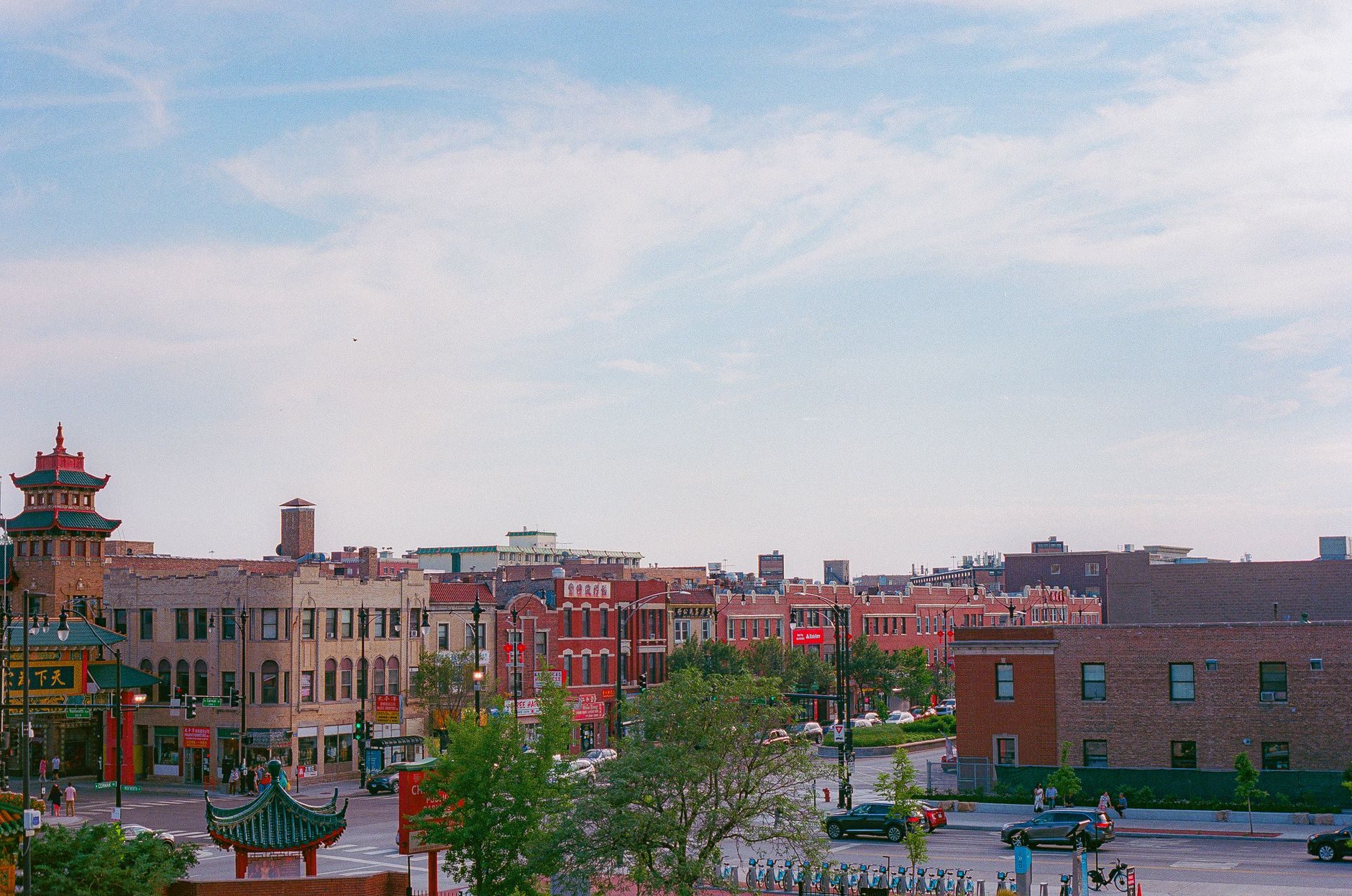
Old Town · Cook County · IL
Homes for sale in
Old Town.
- Active listings
- 8
- Median list
- $1.21M
- Avg time on market
- 127 days
- Sold · last year
- 367
Active listings
8 homes on the market


Be the first to know when a new Old Town home hits the market
Text + email the moment a new listing matches.
About the community
Living in Old Town.
Old Town is a historic neighborhood and landmark district straddling Chicago's Near North Side and Lincoln Park community areas, set just west of the lakefront and immediately south of the Lincoln Park neighborhood. Its heart is the Old Town Triangle, a district roughly framed by North Avenue, Clark Street, and the former line of Ogden Avenue, with Wells Street serving as the commercial and cultural spine. The neighborhood was first settled in the 1850s by German and Luxembourgish Catholic immigrants who farmed the marshy meadows north of North Avenue, earning the area the nickname the Cabbage Patch. The Great Chicago Fire of 1871 leveled nearly everything, and the streets that followed filled with the Victorian-era frame cottages, brick rowhouses, and Italianate and Queen Anne homes that still define the district today, now joined by newer condos and townhomes. By the 1960s the area was the Midwest's bohemian and counterculture hub, home to The Second City and a thriving folk-music scene. Today Old Town draws professionals, families, and longtime residents who want walkable charm, leafy landmark streets, and quick CTA access to the Loop. For buyers, it offers character and a premium price tag, with condominiums making up the large majority of available homes.
At a glance
Landmark district
The Old Town Triangle District was designated a Chicago Landmark in 1977 and added to the National Register of Historic Places in 1984.
The Second City
The legendary sketch-and-improv theater opened in December 1959 at 1616 North Wells Street and launched stars from John Belushi to Tina Fey.
Old Town Art Fair
One of the nation's oldest juried fine-art fairs, founded in 1948 and run by the volunteer Old Town Triangle Association, drawing more than 200 artists each June.
Brown and Purple Line
Old Town's Sedgwick station is served by the CTA Brown Line, with Purple Line Express trains at weekday rush, and is one of the oldest standing L stations, opened in 1900.
St. Michael's Church
Chicago's oldest German parish, founded in 1852, whose 1869 brick church was one of only seven buildings to survive within the path of the Great Chicago Fire.
Premium prices
Old Town homes recently sold at a median around $449,000, with condos near $375 per square foot, well above the Chicago-wide average.
Victorian architecture
The district is built largely in Italianate and Queen Anne styles dating to the 1870s, with frame cottages and brick rowhouses, and many streets break from the standard Chicago grid.
Next to Lincoln Park
Old Town sits directly beside Lincoln Park, the Chicago Park District's largest park at 1,208 acres along Lake Michigan, home to the free Lincoln Park Zoo.
What it’s actually like to live here
Life in Old Town centers on Wells Street, the neighborhood's spine of restaurants, bars, boutiques, and entertainment, anchored by The Second City and Zanies Comedy Club just steps apart near North Avenue. Away from the commercial strip, the landmark Triangle is a quiet warren of tree-lined streets and pre-fire alleys lined with Victorian rowhouses and cottages, where many of the lanes break from the usual Chicago grid. Each June the neighborhood fills for the Old Town Art Fair, which brings more than 200 artists and tens of thousands of visitors into the Triangle for two days. Residents are minutes from Lincoln Park, the city's largest park, with the free Lincoln Park Zoo, the Chicago History Museum, North Avenue Beach, and the Lake Michigan lakefront trail all close at hand.
Old Town today draws a mix of professionals, families, and longtime residents who prize walkable charm and historic character over new-construction sprawl. Transit is a major draw, with the Sedgwick Brown and Purple Line station, one of the oldest on the L, carrying commuters straight into the Loop, and the Red Line reachable nearby at Clark and Division. Condominiums make up the large majority of homes on the market, alongside the district's prized historic single-family rowhouses, and prices run well above the citywide average. The payoff for buyers is a neighborhood that feels both central and intimate, a leafy, landmark pocket of the Near North Side with comedy stages, festivals, and the lakefront all within walking distance.
Around town
What there is to do in Old Town.
A handful of the places people who live here actually use. Not a directory.
- Culture
The Second City
The world-famous sketch and improv theater at 1616 North Wells Street, open since 1959, with an alumni roster including Belushi, Murray, Fey, and Colbert.
- Culture
Old Town Art Fair
One of the nation's oldest juried fine-art fairs, held each June in the Triangle since 1948, with more than 200 artists, a garden walk, live music, and a food court.
- Nightlife
Zanies Comedy Club
Chicago's longest-running stand-up club, open since 1978 at 1548 North Wells Street, an intimate brick room across from Second City that has hosted Seinfeld, Leno, and Chris Rock.
- Landmark
St. Michael's Church
Chicago's oldest German parish and one of just seven buildings to survive the path of the 1871 fire, whose bells traditionally define the borders of Old Town.
- Parks
Lincoln Park and Lincoln Park Zoo
The city's largest park sits right beside Old Town, home to the free, year-round Lincoln Park Zoo, a conservatory, a nature museum, and the lakefront.
- Shopping
Wells Street
The neighborhood's historic main street, lined with boutiques, restaurants, bars, and longtime shops, and the backbone of Old Town's dining and nightlife scene.
By the numbers
Old Town taxes + market stats.
Property tax rates vary by exact township and assessor district. Confirm per address before pricing a purchase.
Median sold price
$515,000
MRED · last 12 mo (367 sales)
How Old Town got here
A bit of history.
Old Town began in the 1850s, when German and Luxembourgish Catholic immigrants settled the marshy meadows north of North Avenue and farmed cabbage, celery, and potatoes, giving the area its early nickname, the Cabbage Patch. Community life centered on St. Michael's Church, Chicago's oldest German parish, founded in 1852, whose towering brick church was completed in 1869 with a steeple that briefly made it among the tallest structures in the city. The Great Chicago Fire of 1871 destroyed nearly all of the neighborhood's wooden houses and gutted St. Michael's interior, though the church's brick walls stood and the building was fully restored by 1873, leaving it as one of only seven structures to survive within the fire's path. Residents rebuilt with small frame cottages until a city ordinance banned further wood construction, after which larger brick and stone rowhouses, Italianate and Queen Anne homes, and apartment buildings filled the eastern blocks.
By the 1940s the neighborhood had become known as Old Town, and residents formed the Old Town Triangle Association in 1948 to repair deteriorating buildings and promote the area, founding the Old Town Art Fair that same year as one of the country's earliest juried fine-art fairs. The neighborhood became the Midwest's center of bohemian and counterculture life in the 1950s and 1960s, with inexpensive Victorian storefronts drawing artists, a folk-music revival, and counterculture along Wells and North Avenues. The Second City opened at 1616 North Wells Street in December 1959, growing into one of the most influential comedy institutions in the English-speaking world. The Triangle's preservation efforts culminated in its 1977 Chicago Landmark designation and 1984 listing on the National Register of Historic Places.
The questions buyers actually ask
Old Town FAQ
The questions I get most from buyers shopping Old Town. If yours isn't here, text 224-385-8779, same-day reply.
- What kinds of homes can I buy in Old Town?
- Old Town's housing is a mix of historic single-family Victorian rowhouses and frame cottages, dating largely to the 1870s rebuilding after the Great Chicago Fire, alongside newer condos and townhomes. In practice, condominiums make up roughly 80 percent of residential listings at any given time, so most buyers are choosing among condos.
- How expensive is Old Town compared to the rest of Chicago?
- It is a premium neighborhood. Recent data shows a median sale price around $449,000, with condos selling near $375 per square foot, well above the Chicago-wide average. Expect to pay a significant premium for the location and historic character.
- What does buying in the Old Town Triangle historic district mean?
- The Old Town Triangle District is a designated Chicago Landmark since 1977 and is on the National Register of Historic Places since 1984. Buying a home within the landmark district generally means exterior changes are subject to historic-preservation review, since the district protects the character of its Victorian-era buildings. Confirm the specific rules with the city and the Old Town Triangle Association before planning any renovation.
- How is the commute and transit?
- Old Town's own L stop is Sedgwick on North Sedgwick Street, served by the CTA Brown Line and by Purple Line Express trains during weekday rush, running directly into the Loop. The Red Line is reachable nearby at Clark and Division, and numerous bus routes serve North, Wells, and Clark.
- What about schools?
- Old Town is served by Chicago Public Schools, with Manierre Elementary among the neighborhood schools, and families also commonly weigh nearby magnet, charter, and private options. Buyers should verify current attendance boundaries and school ratings directly with CPS, since they change.
- What makes Old Town different from Lincoln Park or the Gold Coast?
- Old Town is the small, historic Triangle district of Victorian rowhouses and pre-fire streets centered on Wells Street, sitting between the larger Lincoln Park neighborhood to the north and the Gold Coast to the southeast. Its identity is its compact landmark district, comedy and arts heritage, and intimate scale rather than Lincoln Park's size or the Gold Coast's lakefront luxury high-rises.
- Who is the real estate agent for Old Town?
- Joe Keegan is the local licensed Illinois real estate broker who covers Old Town in Old Town, IL through Subdiview, a neighborhood-first home search for the Chicago suburbs and collar counties. Joe prices and negotiates from the live MRED sold comps for Old Town specifically, not national averages, and can help you buy or sell here. Reach Joe at 224-385-8779 or joe@joekeeganhomes.com.
Nearby
Neighborhoods near Old Town.
If you’re cross-shopping the area, these are the neighborhoods right next to Old Town.
Your local agent
Joe knows Old Town
Most agents will list anything. I focus on the places I actually know, and the things that move value here don't show up in the MLS write-up: which streets and buildings hold demand, what the HOA or assessments really cover, how the comps read once you account for condition and location, and where buyers consistently want to be.
When you're ready to tour or list, you want someone who has read the last 50 closed comps in this specific market, not a national average, and can tell you what they actually mean for your price. That's how I work. Text or call any time, and I'll give you a real take, not a brochure.
- Licensed Illinois broker
- Comp-driven pricing
- Old Town specialist
- Honest local market take
- Brokerocity
Thinking of selling?
What's your home actually worth?
Not a Zestimate. A real CMA from someone who's sold this neighborhood, knows the floor plan premiums, and can tell you which upgrades the buyer pool here actually pays for.
- Pricing range with comp-by-comp logic
- Pre-list improvements that pay back, and the ones that don't
- No obligation, no spam, no auto-dialer