Dunning · Cook County · IL
Homes for sale in
Dunning.
- Active listings
- 1
- Median list
- $575K
- Avg time on market
- 101 days
- Sold · last year
- 277
Active listings
1 home on the market

Beat the rest of the buyers
Be the first to know when a new Dunning home hits the market
Save the search and you will get a text and an email the moment a new listing matches. Most Dunning homes go under contract in the first week, the buyers who win are the ones who saw it first.
About the community
Living in Dunning.
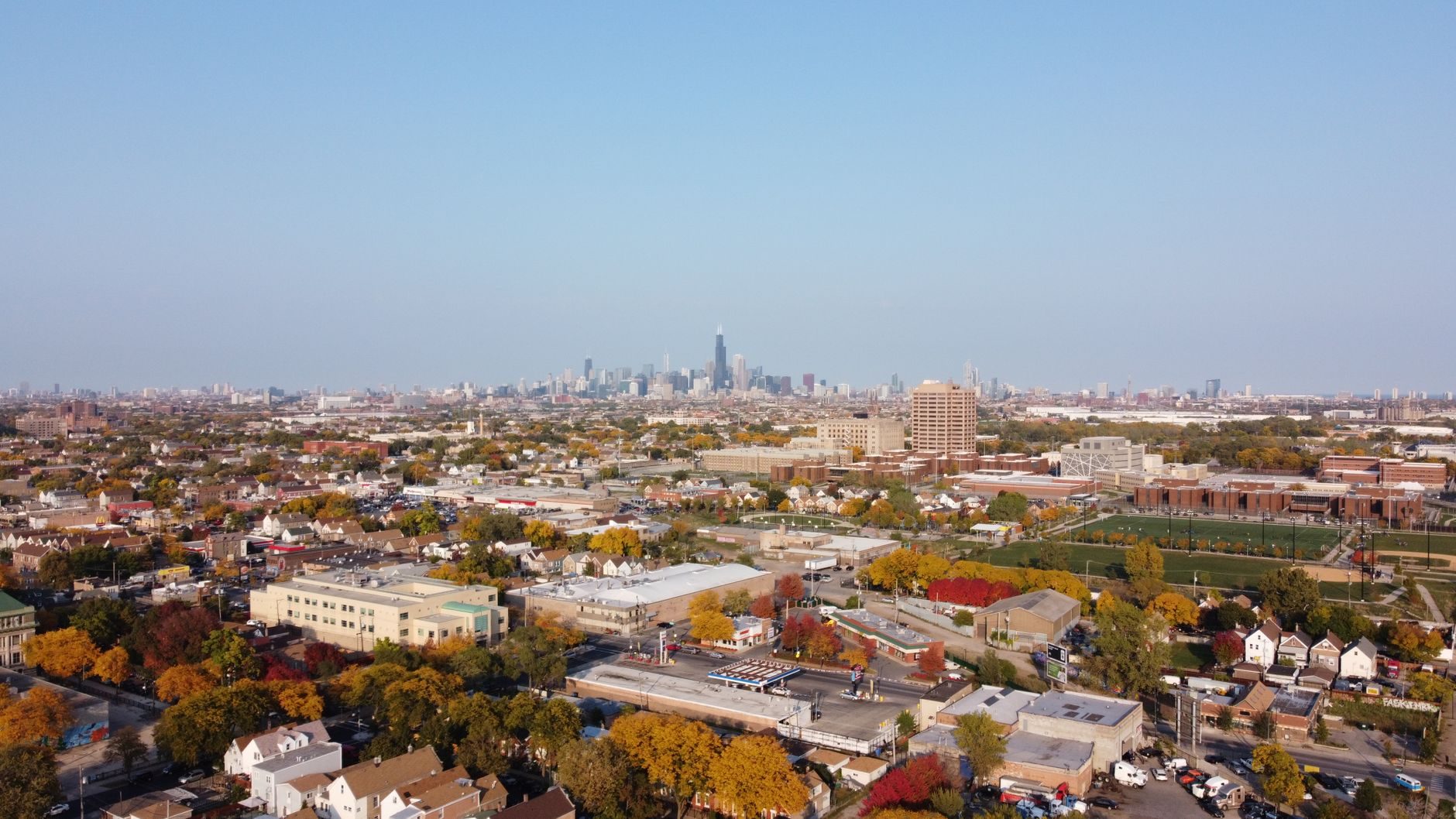
Dunning is Community Area 17 on Chicago's Far Northwest Side, a roughly 3.75-square-mile residential pocket that borders the suburbs of Harwood Heights, Norridge, River Grove, and Elmwood Park. The neighborhood has a settled, suburban-in-the-city feel, anchored by Chicago's classic brick bungalows along with post-war ranches, Georgians, and newer subdivisions built on former institutional land. With a 2020 population of about 41,816 and a median household income near $84,684, Dunning draws families, first-time buyers, and long-term owners who want space, parking, and green space without leaving the city. It sits close to the Cook County Forest Preserves and the Dunning Read Natural Area, and Wilbur Wright College is right inside the community. For buyers, Dunning offers solid masonry housing stock, walkable side streets, and an easy connection to the Kennedy Expressway and downtown.
At a glance
Population about 41,816
Dunning had a 2020 population of roughly 41,816 across about 3.75 square miles.
Median household income
The community's median household income is about $84,684.
Walk Score of 73
Dunning rates as Very Walkable with a Walk Score of 73 and about five bus lines.
20-acre natural area
The Dunning Read Natural Area protects 20 acres of prairie, wetland, and woodland for birding and native plants.
9.30-acre Merrimac Park
Merrimac Park sits on 9.30 acres with ballfields, a fieldhouse, a spray pool, and a woodshop.
Wright College campus
Wilbur Wright College's main campus is at 4300 North Narragansett Avenue in Dunning.
Historic burial ground
A rediscovered county potter's field here holds an estimated 38,000 burials from the 1850s to the 1920s, memorialized at Read Dunning Memorial Park.
Founded as the County Poor Farm
The area was selected in 1851 as the site of Cook County's Poorhouse and Insane Asylum.
What it’s actually like to live here
Day-to-day life in Dunning is quiet and residential, built around tree-lined side streets of solid masonry homes. The housing stock is dominated by Chicago brick bungalows, Cape Cods, ranches, and Georgians, with newer subdivision homes on land once occupied by the county institutions. The neighborhood is anchored by institutions including Wilbur Wright College, Mount Olive Cemetery, and a small but active business district. Walk Score rates Dunning as Very Walkable with a Walk Score of 73, noting good public transportation and roughly five bus lines serving the area.
Getting around is straightforward. CTA bus routes cross the neighborhood, and the Kennedy Expressway (I-90) and nearby I-294 give drivers a direct route downtown and to O'Hare; the Metra Milwaukee District West Line, which runs from Union Station out to Elgin, provides commuter rail service from stations near the area. Green space is a defining feature: Merrimac Park sits on 9.30 acres near Irving Park Road and Narragansett Avenue with ballfields, a fieldhouse, a spray pool, and a woodshop, and the 20-acre Dunning Read Natural Area offers prairies, wetlands, woodlands, and birding trails. The neighborhood also sits near the Cook County Forest Preserves along the Des Plaines River corridor to the west.
Around town
What there is to do in Dunning.
A handful of the places people who live here actually use. Not a directory.
- Parks
Dunning Read Natural Area
A 20-acre Chicago Park District site of prairie, wetland, and woodland with trails that is a popular spot for birding and native plants.
- Recreation
Merrimac Park
A 9.30-acre neighborhood park with a fieldhouse gymnasium, softball fields, a playground, a spray pool, and a woodshop.
- Culture
Wilbur Wright College
A City Colleges of Chicago campus in Dunning offering associate degrees and career programs, recognized as a Center of Excellence in Engineering and Computer Science.
- Culture
Read Dunning Memorial Park
A small memorial park established in 2002 honoring the tens of thousands buried in the former county potter's field.
- Culture
Mount Olive Cemetery
A historic Scandinavian-Lutheran cemetery established in 1886 on land just south of the old Dunning complex.
- Shopping
Brickyard shopping district
The nearby Brickyard retail corridor and neighborhood business district give Dunning residents convenient everyday shopping and dining close to home.
By the numbers
Dunning taxes + market stats.
Property tax rates vary by exact township and assessor district. Confirm per address before pricing a purchase.
Median sold price
$395,000
MRED · last 12 mo (277 sales)
How Dunning got here
A bit of history.
In 1851, the rural settlement that became Dunning was selected by the Cook County Board of Commissioners as the site for Chicago's new Poorhouse and Insane Asylum, after the county purchased 160 acres from settler Peter Ludby. Together known as the Cook County Poor Farm, the institution opened in a three-story brick building and over the following decades expanded to include a separate insane asylum building in 1870, a tuberculosis hospital in 1899, a potter's field, a schoolhouse, and many support structures serving more than 1,000 patients. In 1912 the county transferred the property to the State of Illinois, and the facility was renamed the Chicago State Hospital; when that hospital closed in 1970 its operations merged into the Chicago-Read Mental Health Center, which still operates on part of the grounds. The burial ground served as a county potter's field, and in 1989 development work near Irving Park Road and Narragansett Avenue led to the rediscovery of the site, where an estimated 38,000 people were buried between the 1850s and 1920s. The small Read Dunning Memorial Park was established in 2002 to honor those buried there.
The neighborhood name comes from David S. Dunning and his son Andrew, who in 1865 bought 120 acres south of the county complex. To serve the growing institution, the Cook County Commissioners built a roughly three-mile rail spur with daily service run by the Milwaukee and St. Paul Railway, and a depot named Dunning was built in honor of the nearby property owners; a streetcar line on Irving Park Road followed in 1896. The settlement around the depot attracted Swedish, German, and Polish immigrants and was annexed to Chicago in 1889, remaining largely a farming area until about 1910. The population grew sharply after 1920, Wright Junior College was built in the area in 1934, and Dunning developed into the brick-bungalow community it remains today. The neighborhood saw renewed commercial and residential growth in the 1980s and 1990s, with new housing rising on portions of the former hospital grounds.
The questions buyers actually ask
Dunning FAQ
The questions I get most from buyers shopping Dunning. If yours isn't here, text 224-385-8779, same-day reply.
- What kind of homes can I buy in Dunning?
- Dunning's housing stock is dominated by classic Chicago brick bungalows, along with Cape Cods, ranches, and brick Georgians, plus newer subdivision homes built on portions of the former county institutional land. This mix means buyers can find solid masonry construction at a range of price points and sizes. The neighborhood's residential character and detached single-family homes appeal to families and first-time buyers.
- How do I confirm which CPS school my home is zoned for?
- Dunning is served by several Chicago Public Schools attendance areas, and elementary boundaries in the area have included schools such as Bridge, Canty, Dever, and Smyser. Because CPS attendance boundaries can change and are address-specific, you should always verify the exact zoned schools for any property using the official CPS School Locator before you buy. Enter the precise street address to confirm the assigned elementary and high schools.
- How is the commute downtown?
- Dunning offers several routes to the Loop. The Kennedy Expressway (I-90) provides a direct driving route downtown and to O'Hare, and CTA bus lines connect the neighborhood to the wider transit network. The Metra Milwaukee District West Line, running from Union Station out to Elgin, provides commuter rail service from stations near the area.
- How walkable is the neighborhood?
- Walk Score rates Dunning as Very Walkable with a Walk Score of 73, noting good public transportation and roughly five bus lines serving the community. In practice that means many everyday errands can be done on foot in the more central parts of the neighborhood, though walkability varies block to block. Buyers who want maximum walkability should check the specific address.
- What green space and forest preserve access is nearby?
- Dunning is unusually green for a city neighborhood. The 20-acre Dunning Read Natural Area offers prairie, wetland, and woodland habitat with trails for birding and walking, and the 9.30-acre Merrimac Park provides ballfields, a fieldhouse, and a spray pool. The neighborhood also sits near the Cook County Forest Preserves along the Des Plaines River corridor to the west.
- What makes Dunning distinct from other Northwest Side neighborhoods?
- Dunning combines a quiet, suburban-feeling residential grid with a deep and unusual history tied to the former Cook County Poor Farm and asylum, parts of which were redeveloped into housing and the Chicago-Read Mental Health Center. It is also home to Wilbur Wright College and large natural and cemetery green spaces, giving it more open land than many surrounding areas. The result is a settled, family-oriented community with strong masonry housing and easy suburban borders.
- Should I expect city or suburban-style property taxes?
- Dunning is within the City of Chicago and Cook County, so homes here are assessed and taxed under the Cook County property tax system. Because assessments and exemptions such as the homeowner exemption are address-specific and change over time, buyers should review the current tax bill and assessed value for any individual property with the Cook County Assessor before purchasing.
- Who is the real estate agent for Dunning?
- Joe Keegan is the local licensed Illinois real estate broker who covers Dunning in Dunning, IL through Subdiview, a neighborhood-first home search for the Chicago suburbs and collar counties. Joe prices and negotiates from the live MRED sold comps for Dunning specifically, not national averages, and can help you buy or sell here. Reach Joe at 224-385-8779 or joe@joekeeganhomes.com.
Nearby
Neighborhoods near Dunning.
If you’re cross-shopping the area, these are the neighborhoods right next to Dunning.
Your local agent
Joe knows Dunning
Most agents will list anything. I focus on the places I actually know, and the things that move value here don't show up in the MLS write-up: which streets and buildings hold demand, what the HOA or assessments really cover, how the comps read once you account for condition and location, and where buyers consistently want to be.
When you're ready to tour or list, you want someone who has read the last 50 closed comps in this specific market, not a national average, and can tell you what they actually mean for your price. That's how I work. Text or call any time, and I'll give you a real take, not a brochure.
- Licensed Illinois broker
- Comp-driven pricing
- Dunning specialist
- Honest local market take
- Brokerocity
Thinking of selling?
What's your home actually worth?
Not a Zestimate. A real CMA from someone who's sold this neighborhood, knows the floor plan premiums, and can tell you which upgrades the buyer pool here actually pays for.
- Pricing range with comp-by-comp logic
- Pre-list improvements that pay back, and the ones that don't
- No obligation, no spam, no auto-dialer