Park Forest · Cook County · IL
Homes for sale in
Park Forest.
- Active listings
- 117
- Median list
- $175K
- Avg time on market
- 28 days
- Sold · last year
- 263
Active listings
117 homes on the market


Be the first to know when a new Park Forest home hits the market
Text + email the moment a new listing matches.
About the community
Living in Park Forest.
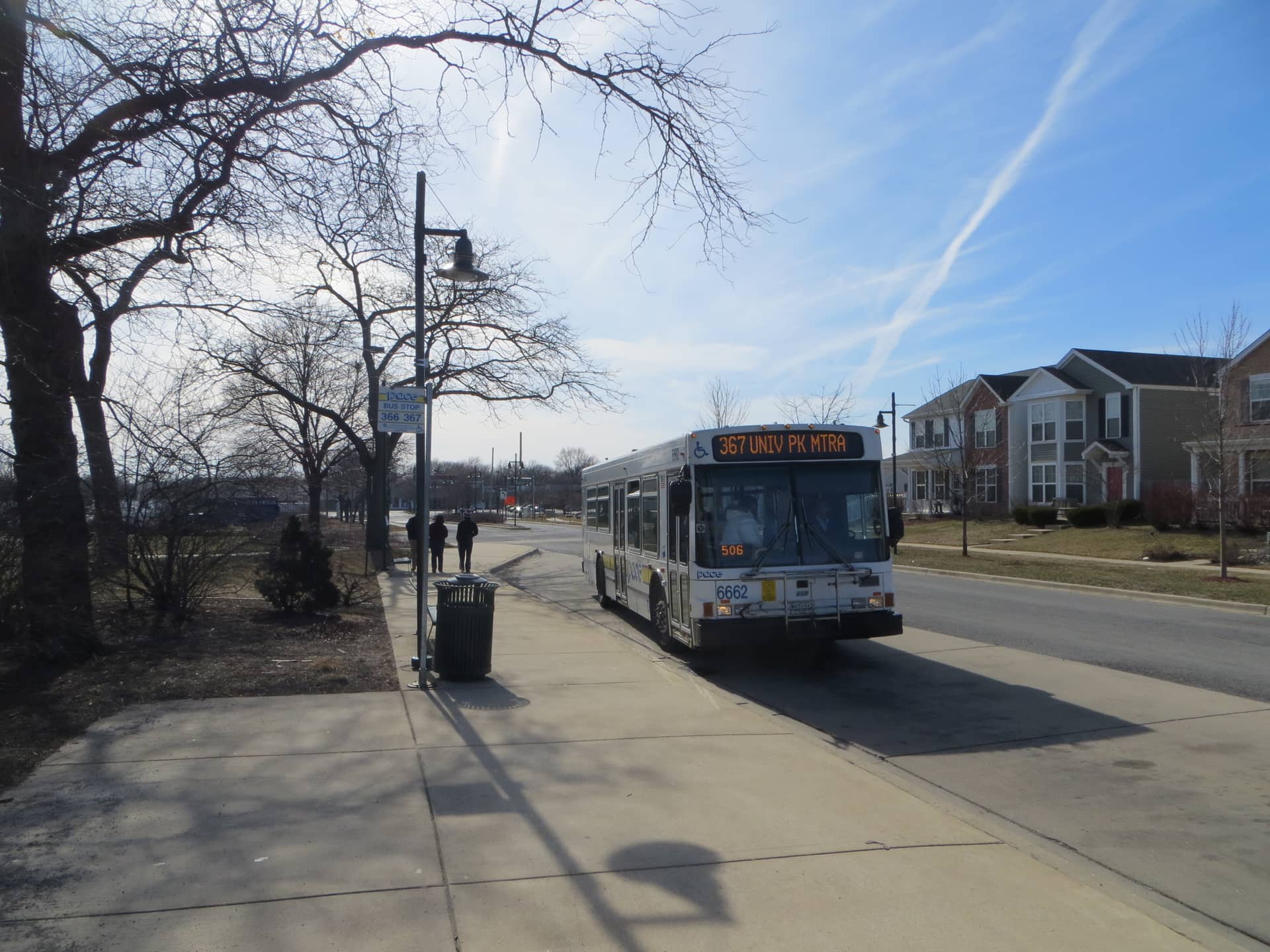
Park Forest is a south-suburban village in Cook County, with a small slice in Will County, that was conceived in 1946 and built starting in 1948 as the nation's first large postwar planned community, designed to house GIs returning from World War II. That heritage still shapes the village's leafy curvilinear streets, abundant green space, and strong sense of civic identity, and it made Park Forest the subject of William H. Whyte's landmark 1956 book The Organization Man. Today the village is known for being remarkably affordable, with a median home value around $154,000, well below Cook County and national norms. Commuters reach downtown Chicago on the Metra Electric District line via the adjacent 211th Street/Lincoln Highway station, about 27.6 miles from the Millennium Station terminal. The revitalized DownTown Park Forest, rebuilt from the old Park Forest Plaza into a true Main Street, hosts more than 80 businesses and draws roughly 200,000 visitors a year to its festivals and events. Buyers should weigh that affordability against a high effective property tax burden, a real trade-off in this part of the south suburbs.
At a glance
First planned suburb
Announced in 1946 and built from 1948 as the first large postwar GI planned community in the United States.
21,687 residents
Population was 21,687 at the 2020 census, spread across about 4.96 square miles.
The Organization Man
The community profiled most prominently in William H. Whyte's 1956 book The Organization Man.
Metra Electric line
The 211th Street/Lincoln Highway station on the Metra Electric District offers a one-seat ride to Millennium Station.
Award-winning DownTown
A two-time All-America City whose rebuilt DownTown earned the Burnham Award for excellence in planning.
Affordable homes
Median home value around $154,000, among the lowest in the south suburbs.
Arts community
Home to the Tall Grass Arts Association gallery and the Illinois Theatre Center.
High property taxes
A median effective property tax rate near 5.6 percent, a real trade-off against the low purchase prices.
What’s close
Park Forest sits about 30 miles south of the Chicago Loop in the south suburbs, bounded roughly by US-30 (Lincoln Highway) on the north, Western Avenue on the east, Central Park Avenue on the west, and Thorn Creek on the south.
- DownTown Park Forest
- A rebuilt Main Street commercial district with more than 80 businesses and roughly 200,000 annual visitors, on the site of the former Park Forest Plaza.
- 211th Street/Lincoln Highway Metra station
- An adjacent Metra Electric stop whose eastern parking lot is in Park Forest, offering a one-seat ride to downtown Chicago.
- Tall Grass Arts Association
- A regional art gallery, gift shop, and art school in the DownTown Cultural Center, host of the annual Park Forest Art Fair.
- Central Park and the Aqua Center
- Central Park offers lighted ball diamonds, tennis, and trails, next to the Park Forest Aqua Center, a neighborhood pool since 1952.
- Old Plank Road Trail
- A flat, paved rail-to-trail running from Western Avenue through Park Forest west toward Joliet and Frankfort.
- Major roads
- US-30 (Lincoln Highway), Western Avenue, Sauk Trail, and Central Park Avenue frame and cross the village.
What it’s actually like to live here
Daily life in Park Forest is anchored by its DownTown, a walkable district that replaced a fading enclosed mall with a Main Street grid of shops, restaurants, civic buildings, and gathering spaces. The district hosts a steady calendar of festivals and community events that pull in roughly 200,000 visitors a year, and it houses cultural institutions including the Tall Grass Arts Association gallery and art school, the Illinois Theatre Center, and the Nathan Manilow Theatre at Freedom Hall. The village's planned-community DNA shows in its generous parks, mature tree canopy, and looping residential streets.
Outdoor and recreational life is a real draw. The Park Forest Aqua Center, open since 1952, features multiple pools, a 160-foot water slide, drop slides, and a climbing wall, and Central Park next door offers ball fields, tennis courts, and wetland trails. The Old Plank Road Trail provides paved miles for walking and cycling, and the village's long-running Labor Day Scenic race remains a local tradition. The Park Forest Tennis and Health Club and year-round Park District programming round out an active, family-friendly lifestyle.
Neighborhoods
Detailed Park Forest community pages coming soon.
Browse the listings above. Detailed neighborhood pages with market stats, school info, and lifestyle take-downs land here as we roll them out.
Schools
Districts serving Park Forest.
Boundary lines do shift. Always confirm in writing for a specific address before writing an offer.
- SD163Grades Pre-K-8
Park Forest-Chicago Heights School District 163
Schools serving the area
- 21st Century Primary Center
- Michelle Obama School of Technology and the Arts
- Blackhawk Primary Center
- Mohawk Primary Center
- Algonquin Pre-Kindergarten Center
District 163 is the primary elementary and middle district serving most of Park Forest. Small portions of the village fall into Matteson SD 162 and, in the Will County area, Crete-Monee CUSD 201U, so verify by address.
- HSD227Grades 9-12
Rich Township High School District 227
Schools serving the area
- Rich Township High School - Central Campus (Olympia Fields)
- Rich Township High School - South Campus (Richton Park)
The high-school district consolidated after closing Rich East High School in Park Forest in 2021, relocating students to the Central and South campuses now run under the single Rich Township High School identity. Confirm the assigned campus by address.
Homes by school
Homes for sale by school in Park Forest
Homes in the Fine Arts & Communications Campus district
Rich Township High School District 227
Homes in the Rich Township HS district
Rich Township High School District 227
Homes in the Crete-Monee HS district
Crete-Monee Community Unit School District 201U
Homes in the Rich Township STEM district
Rich Township High School District 227
Around town
What there is to do in Park Forest.
A handful of the places people who live here actually use. Not a directory.
- Parks
Central Park
A large active-and-passive park with lighted baseball and softball diamonds, tennis courts, soccer and football fields, a playground, and a wetland trail.
- Family
Park Forest Aqua Center
An outdoor aquatic center operating since 1952, with multiple pools, a 160-foot water slide, drop slides, and a 15-foot climbing wall.
- Culture
Tall Grass Arts Association
A regional fine-art gallery, gift shop, and art school in DownTown's Cultural Center that runs the annual Park Forest Art Fair.
- Culture
Illinois Theatre Center
A professional theatre founded in 1976 and located in DownTown Park Forest, presenting a main-stage play series plus a drama school.
- Shopping
DownTown Park Forest
A revitalized Main Street district with more than 80 businesses, shops, dining, and year-round community events.
- Parks
Old Plank Road Trail
A flat, paved linear rail-trail running through prairie from Park Forest toward Joliet, ideal for walking and biking.
Getting around
Commute + transit from Park Forest.
- Stations: 211th Street/Lincoln Highway
- Terminal: Millennium Station
- Routes: US 30 (Lincoln Highway) · Western Avenue · Sauk Trail · Central Park Avenue
- O'Hare Airport: ~58 min
- Chicago Loop: ~45 min
By the numbers
Park Forest taxes + market stats.
Property tax rates vary by exact township and assessor district. Confirm per address before pricing a purchase.
Property tax rate
5.59%
effective avg
Sales tax
9.00%
combined
Median sold price
$158,000
MRED · last 12 mo (263 sales)
Median household income
$61,072
ACS
How Park Forest got here
A bit of history.
Park Forest began on October 28, 1946, when developers Nathan Manilow, Carroll F. Sweet, and Philip M. Klutznick held a press conference at Chicago's Palmer House to announce a new self-governing community in the south suburbs, to be built by their firm American Community Builders. Construction started in 1948, with the town partly designed by planner Elbert Peets, expressly to provide housing for veterans returning from World War II. Studs Terkel later wrote that, alongside Levittown, Park Forest became one of two new names in American folk speech for the GI-Bill suburb and the new middle class it created. The village was named an All-America City in 1954 and again in 1976 for its open-housing and racial-integration efforts.
In 1956, Fortune magazine editor William H. Whyte published The Organization Man, a defining study of postwar corporate and suburban life, and Park Forest was the community that figured most prominently in his portrait of conformity, mobility, and middle-class home life. For decades the village's commercial heart was the Park Forest Plaza, an open-air regional shopping center of more than 50 stores anchored by Sears, Marshall Field's, and Goldblatt's. As that model declined, the village demolished over 300,000 square feet of vacant retail and rebuilt the site as a new street grid, creating today's DownTown Park Forest, an effort recognized with the Burnham Award for excellence in planning.
The questions buyers actually ask
Park Forest FAQ
The questions I get most from buyers shopping Park Forest. If yours isn't here, text 224-385-8779, same-day reply.
- What school districts serve Park Forest?
- Most of the village is served by Park Forest-Chicago Heights School District 163 for Pre-K through 8th grade and by Rich Township High School District 227 for grades 9 to 12. Small portions also fall in Matteson SD 162 and, in the Will County area, Crete-Monee CUSD 201U. Confirm the assigned schools by address before buying.
- How do I commute to downtown Chicago from Park Forest?
- The Metra Electric District line offers a one-seat ride to downtown's Millennium Station. The nearest stop is the 211th Street/Lincoln Highway station, about 27.6 miles from Millennium Station, with parking that extends into Park Forest.
- Are property taxes high in Park Forest?
- Yes, and buyers should plan for it. The median effective property tax rate is about 5.6 percent, more than double the Illinois median and far above the national median, with a median annual bill near $7,300. The low purchase prices are partly a reflection of this heavy tax load, so always factor taxes into your monthly budget.
- Why is Park Forest so affordable?
- Median home values run around $154,000, well below Cook County and national figures. The combination of older postwar housing stock and a high effective property tax rate keeps purchase prices among the lowest in the south suburbs, which can be an opportunity for buyers who run the full monthly math.
- What makes Park Forest's planned-community character distinctive?
- It was the first large postwar planned suburb in the United States, built from 1948 for returning WWII veterans and famously profiled in William H. Whyte's The Organization Man. That heritage lives on in its curving tree-lined streets, ample parks, and a deliberately rebuilt, walkable DownTown.
- Where should I look for the best of Park Forest?
- Start with DownTown Park Forest for shopping, dining, the Tall Grass Arts gallery, and the Illinois Theatre Center, then explore Central Park, the Aqua Center, and the Old Plank Road Trail for recreation. The mature, tree-lined residential streets near the parks are the heart of the planned community.
- Who is the real estate agent for Park Forest?
- Joe Keegan is the local licensed Illinois real estate broker who covers Park Forest in Park Forest, IL through Subdiview, a neighborhood-first home search for the Chicago suburbs and collar counties. Joe prices and negotiates from the live MRED sold comps for Park Forest specifically, not national averages, and can help you buy or sell here. Reach Joe at 224-385-8779 or joe@joekeeganhomes.com.
Nearby
Towns next to Park Forest.
If you’re cross-shopping the area, these are the places that border Park Forest.
Your local agent
Joe knows Park Forest
Most agents will list anything. I focus on the places I actually know, and the things that move value here don't show up in the MLS write-up: which streets and buildings hold demand, what the HOA or assessments really cover, how the comps read once you account for condition and location, and where buyers consistently want to be.
When you're ready to tour or list, you want someone who has read the last 50 closed comps in this specific market, not a national average, and can tell you what they actually mean for your price. That's how I work. Text or call any time, and I'll give you a real take, not a brochure.
- Licensed Illinois broker
- Comp-driven pricing
- Park Forest specialist
- Honest local market take
- Brokerocity
Thinking of selling?
What's your home actually worth?
Not a Zestimate. A real CMA from someone who's sold this neighborhood, knows the floor plan premiums, and can tell you which upgrades the buyer pool here actually pays for.
- Pricing range with comp-by-comp logic
- Pre-list improvements that pay back, and the ones that don't
- No obligation, no spam, no auto-dialer