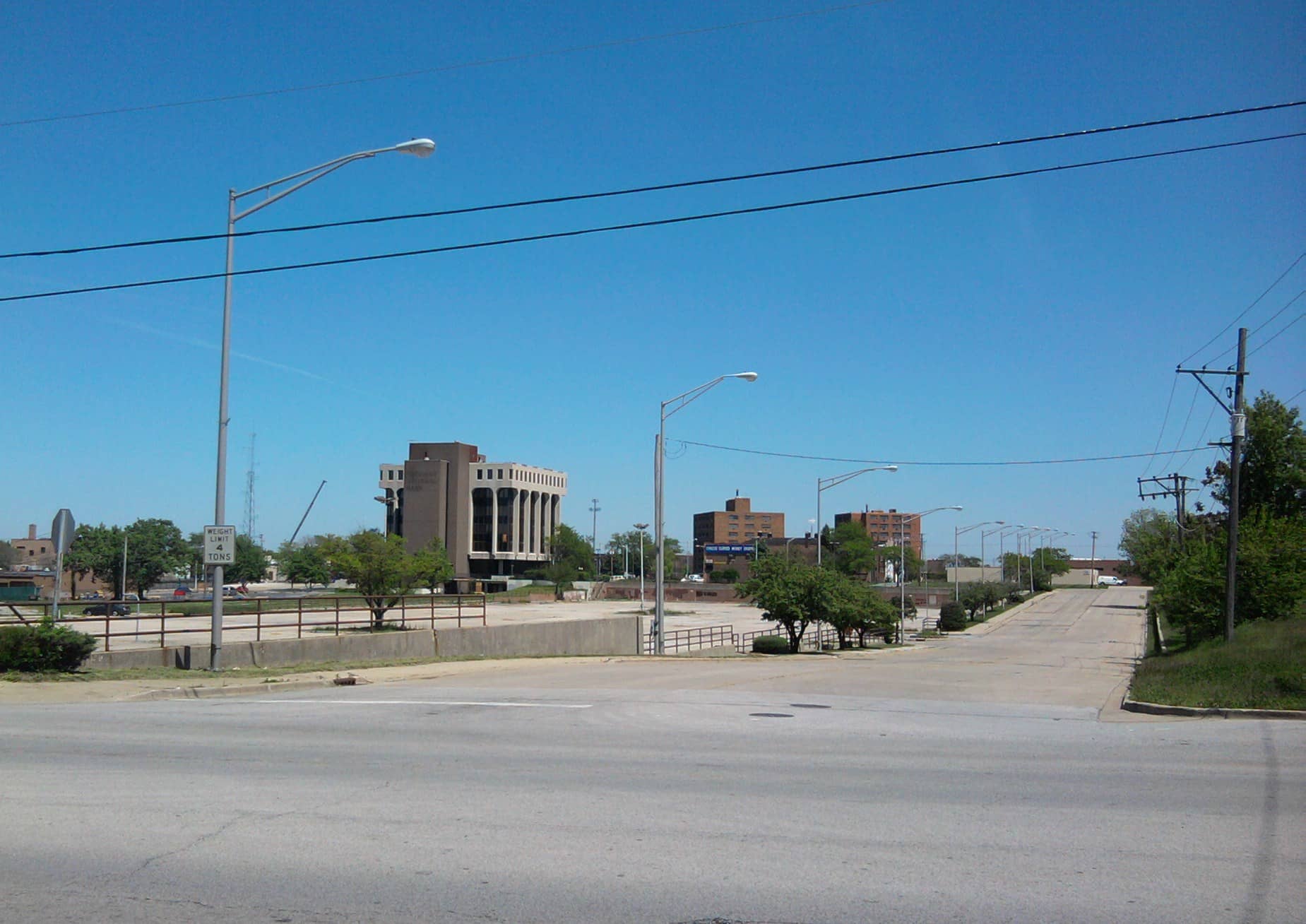
Chicago Heights · Cook County · IL
Homes for sale in
Chicago Heights.
- Active listings
- 71
- Median list
- $190K
- Avg time on market
- 10 days
- Sold · last year
- 189
Active listings
71 homes on the market


Be the first to know when a new Chicago Heights home hits the market
Text + email the moment a new listing matches.
About the community
Living in Chicago Heights.
Chicago Heights is a city of about 27,000 in southern Cook County, roughly 30 miles south of the Chicago Loop. It sits at the historic crossing of the Lincoln Highway (U.S. Route 30) and Dixie Highway (Illinois Route 1), a junction that earned the city its nickname, the Crossroads of the Nation. Built up in the 1890s as an outer-ring industrial suburb, it drew steel, glass, and tile factories and a deeply mixed workforce. Today it is a diverse, predominantly Black and Hispanic community with an affordable, older housing stock and a median home value well below regional figures. Prairie State College, Bloom High School, and Marian Catholic High School anchor local education, and the Old Plank Road and Thorn Creek trails run through town.
At a glance
~27,000 residents
Population was 27,480 at the 2020 Census, estimated around 26,500 in 2024.
Crossroads of the Nation
The city sits where Lincoln Highway (US 30) crosses Dixie Highway (IL Route 1), its namesake junction.
District 170 + Bloom 206
Chicago Heights School District 170 covers K-8; Bloom Township High School District 206 runs Bloom and Bloom Trail high schools.
Prairie State College
A public community college on a 137-acre campus at Halsted Street and Vollmer Road.
Old Plank Road Trail
A 22-mile paved rail-trail with its eastern end in Chicago Heights, connecting to the Thorn Creek Trail.
Affordable housing
The median home value is well below state and national medians, around $115,620 per Ownwell records.
About 30 miles south
The city lies roughly 30 miles south of the Chicago Loop in southern Cook County.
What’s close
Chicago Heights anchors the south-suburban corridor where major highways converge, with parks, trails, schools, and a community college within easy reach.
- Lincoln Highway and Dixie Highway
- The city sits at the junction of US 30 and IL Route 1, with I-394 and I-80 nearby.
- Old Plank Road Trail
- The 22-mile paved rail-trail's eastern terminus is here, linking to the Forest Preserve's Thorn Creek Trail.
- Prairie State College
- Located in the city at South Halsted Street and Vollmer Road, the only college in Community College District 515.
- Pace Chicago Heights Terminal
- Six Pace bus routes serve the city through this transit terminal.
- Bloom and Marian Catholic high schools
- Bloom High School (founded 1900) and Marian Catholic High School are both located in the city.
- Thorn Creek and Indian Hill Woods
- Forest preserve land and a continuous paved trail system run through town along Thorn Creek.
What it’s actually like to live here
Chicago Heights is a diverse south-suburban community of roughly 27,000 people. As of the 2020 Census it was about 42 percent Black and 39 percent Hispanic or Latino, with a median age around 35.5 years and about 9,261 households. The American Community Survey put the median household income near $57,000. It is a predominantly urban, family-oriented place, with about 38 percent of households including children under 18 at the 2020 Census.
Housing here is older and notably affordable by regional standards. There were about 10,663 housing units at the 2020 Census, and the median home value sits well below Cook County and Illinois figures. The trade-off, common across south Cook County, is a high effective property tax rate. Day to day, residents have the Chicago Heights Park District facilities, the Old Plank Road and Thorn Creek trails, Prairie State College for continuing education, and quick highway access for commuting north toward the city or east toward Indiana.
Neighborhoods
Detailed Chicago Heights community pages coming soon.
Browse the listings above. Detailed neighborhood pages with market stats, school info, and lifestyle take-downs land here as we roll them out.
Schools
Districts serving Chicago Heights.
Boundary lines do shift. Always confirm in writing for a specific address before writing an offer.
- SD170Grades Pre-K – 8
Chicago Heights School District 170
Schools serving the area
- Chicago Heights Middle School
- Garfield Elementary
- Jefferson Elementary
- Lincoln Elementary
- Washington-McKinley Elementary
Operates about twelve schools serving most of Chicago Heights K-8. After 8th grade students attend Bloom or Bloom Trail in District 206.
- D206Grades 9 – 12
Bloom Township High School District 206
Schools serving the area
- Bloom High School
- Bloom Trail High School
Serves Chicago Heights and neighboring communities including Steger, South Chicago Heights, Ford Heights, Sauk Village, and Glenwood.
Around town
What there is to do in Chicago Heights.
A handful of the places people who live here actually use. Not a directory.
- Culture
Prairie State College
A public community college on a 137-acre campus at Halsted Street and Vollmer Road.
- Parks
Old Plank Road Trail
A 22-mile paved rail-trail connecting Joliet through Chicago Heights, used for walking and cycling.
- Parks
Thorn Creek Trail System
A continuous paved Forest Preserve path that connects to the Old Plank Road Trail and runs through Indian Hill Woods.
- Culture
Marian Catholic High School
A co-educational Catholic secondary school whose band has won multiple Bands of America Grand National Championships.
- Family
Chicago Heights Park District
Operates recreational facilities including a fitness center and indoor pool, plus camps and community events.
- Culture
Chicago Heights Free Public Library
A public library tracing its roots to a Carnegie-funded building opened in 1903, at 15th Street and Chicago Road.
Getting around
Commute + transit from Chicago Heights.
- Routes: U.S. Route 30 (Lincoln Highway) · IL Route 1 (Dixie Highway) · I-394 · I-80
- O'Hare Airport: ~55 min
By the numbers
Chicago Heights taxes + market stats.
Property tax rates vary by exact township and assessor district. Confirm per address before pricing a purchase.
Property tax rate
3.88%
effective avg
Sales tax
10.00%
combined
Median sold price
$192,500
MRED · last 12 mo (189 sales)
Median household income
$57,479
ACS
How Chicago Heights got here
A bit of history.
The first recorded non-Native settlement in the area came in 1833, when Absalom Wells built a cabin on the ridge above Thorn Creek. By the 1840s a small rural community called Thorn Grove had formed around a Presbyterian church. In the 1890s a group of Chicago developers led by Charles Wacker formed the Chicago Heights Land Association to create an outer-ring industrial suburb, persuading businesses including Inland Steel, the Owens-Illinois Glass Company, and the Ludowici Roofing Tile Company to build factories there. The community incorporated as a village in 1892 and as a city in 1900.
The new factories drew large numbers of Italian, Polish, Slovak, Lithuanian, Irish, and Black workers to the East Side and Hill neighborhoods, and a busy downtown formed as a regional center. In 1916 the Lincoln Highway Association was persuaded to route the country's first transcontinental highway through the city, which led to the nickname the Crossroads of the Nation. During Prohibition the city was a known bootlegging hub. World War II production revived the local factories and fueled prosperity into the 1950s, including a Ford metal-stamping plant on Lincoln Highway that still operates, before heavy manufacturing scaled back in the 1970s.
The questions buyers actually ask
Chicago Heights FAQ
The questions I get most from buyers shopping Chicago Heights. If yours isn't here, text 224-385-8779, same-day reply.
- Where is Chicago Heights and how far is it from downtown Chicago?
- It is a city in southern Cook County, about 30 miles south of the Chicago Loop, at the crossing of Lincoln Highway and Dixie Highway. I-394 and I-80 are both nearby for the drive north or east.
- Are homes in Chicago Heights affordable?
- Yes, relative to the region. Ownwell records a median home value around $115,620, well below the Cook County and Illinois medians, which makes it one of the more affordable entry points in the south suburbs.
- What are property taxes like?
- They run high, as in much of south Cook County. Ownwell reports a median effective property tax rate of about 3.88 percent, with a median annual tax bill around $4,333. Always confirm by pulling the actual bill for a specific address.
- What is the sales tax rate?
- The combined rate is 10.0 percent, made up of 6.25 percent state, 1.75 percent Cook County, 1 percent city, and 1 percent special tax.
- What schools serve Chicago Heights?
- Most of the city is in Chicago Heights School District 170 for grades pre-K through 8, then Bloom Township High School District 206 (Bloom and Bloom Trail) for grades 9-12. Marian Catholic High School and Prairie State College are also in the city.
- Can I take the train to the city from Chicago Heights?
- Not yet by Metra. The city is served by six Pace bus routes through the Pace Chicago Heights Terminal, and a Metra SouthEast Service line is proposed but not operating today. Most commuters drive via I-394 and I-80.
- What is there to do outdoors?
- The Old Plank Road Trail (22 miles, paved) has its eastern end in town and connects to the Thorn Creek Trail through Indian Hill Woods, and the Chicago Heights Park District runs a fitness center and indoor pool.
- Who is the real estate agent for Chicago Heights?
- Joe Keegan is the local licensed Illinois real estate broker who covers Chicago Heights in Chicago Heights, IL through Subdiview, a neighborhood-first home search for the Chicago suburbs and collar counties. Joe prices and negotiates from the live MRED sold comps for Chicago Heights specifically, not national averages, and can help you buy or sell here. Reach Joe at 224-385-8779 or joe@joekeeganhomes.com.
Nearby
Towns next to Chicago Heights.
If you’re cross-shopping the area, these are the places that border Chicago Heights.
Your local agent
Joe knows Chicago Heights
Most agents will list anything. I focus on the places I actually know, and the things that move value here don't show up in the MLS write-up: which streets and buildings hold demand, what the HOA or assessments really cover, how the comps read once you account for condition and location, and where buyers consistently want to be.
When you're ready to tour or list, you want someone who has read the last 50 closed comps in this specific market, not a national average, and can tell you what they actually mean for your price. That's how I work. Text or call any time, and I'll give you a real take, not a brochure.
- Licensed Illinois broker
- Comp-driven pricing
- Chicago Heights specialist
- Honest local market take
- Brokerocity
Thinking of selling?
What's your home actually worth?
Not a Zestimate. A real CMA from someone who's sold this neighborhood, knows the floor plan premiums, and can tell you which upgrades the buyer pool here actually pays for.
- Pricing range with comp-by-comp logic
- Pre-list improvements that pay back, and the ones that don't
- No obligation, no spam, no auto-dialer