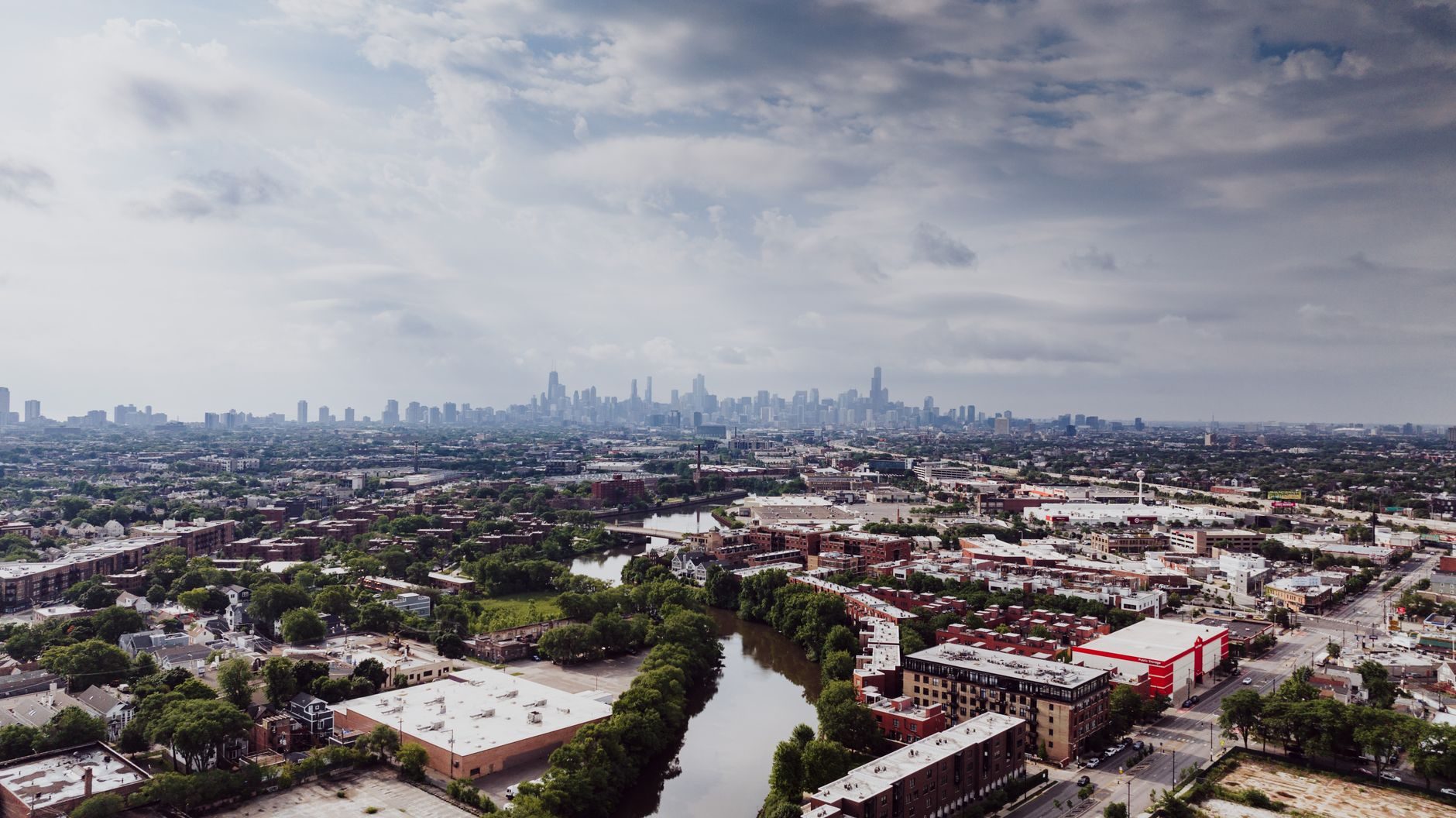
Grand Crossing · Cook County · IL
Homes for sale in
Grand Crossing.
- Active listings
- 16
- Median list
- $188K
- Avg time on market
- 124 days
- Sold · last year
- 116
Active listings
16 homes on the market


Be the first to know when a new Grand Crossing home hits the market
Text + email the moment a new listing matches.
About the community
Living in Grand Crossing.
Grand Crossing, formally the Greater Grand Crossing community area, sits on Chicago's South Side and is counted as one of the city's 77 official community areas, Community Area 69. It is a predominantly residential, historically working neighborhood that grew up around a literal railroad crossing, the point where competing rail lines met in the 1850s, which is exactly how the area got its name. The community area spans about 3.56 square miles and is home to roughly 29,563 residents. The housing stock leans toward early twentieth century Chicago brick bungalows, two-flats, and greystones, with the South Park Manor Historic District documenting the bungalow-belt build-out of the early 1900s. The market here is among the more affordable in the city, with a recent median sale price near $155,000 in the Grand Crossing sub-neighborhood. Transit is a real strength, with a Transit Score of 66 and about five bus lines crossing the neighborhood. Commuters can reach downtown on the Metra Electric District line from the 75th Street (Grand Crossing) station, and the CTA Red Line serves the area around the clock at the nearby 69th and 79th Street stations. The neighborhood carries a Walk Score of 69, meaning some errands can be done on foot, and it has deep cultural roots, from poet Gwendolyn Brooks to artist Theaster Gates's Stony Island Arts Bank.
At a glance
South Side community area
Greater Grand Crossing is Community Area 69, one of Chicago's 77 official community areas, located on the South Side.
Population about 29,563
The community area covers roughly 3.56 square miles with a population around 29,563.
Named for a rail crossing
The name comes from an 1853 crossing dispute between two competing railroads at this spot on the South Side.
Bungalows and greystones
Early 1900s Chicago brick bungalows define the housing stock, documented in the South Park Manor Historic District.
Walk Score 69
Rated somewhat walkable, where some daily errands can be handled on foot.
Transit Score 66
Good transit, with about five bus lines passing through the neighborhood.
Metra Electric at 75th Street
The Metra Electric District serves the 75th Street (Grand Crossing) station at 75th and South Chicago Avenue.
Median sale price near $155K
Grand Crossing homes sold at a median around $155,000 in early 2026.
What it’s actually like to live here
Living in Grand Crossing means access to one of Chicago's more affordable for-sale markets paired with strong transit. Redfin pegged the Grand Crossing median sale price near $155,000 in early 2026, at roughly $76 per square foot, while the broader Greater Grand Crossing market ran higher at around $240,000. The housing itself is classic South Side brick: bungalows, two-flats, and greystones from the early 1900s build-out, with the South Park Manor Historic District recognized for its bungalows. Getting around is straightforward, with a Walk Score of 69 and a Transit Score of 66, about five bus lines, Metra Electric service to downtown from 75th Street, and around-the-clock CTA Red Line access at the nearby 69th and 79th Street stations.
Day to day life is anchored by green space and local institutions. Grand Crossing Park, a roughly 18.77-acre Chicago Park District site with a historic 1914 fieldhouse, offers two gymnasiums, a fitness center, a pool, and ball fields, and it is listed on the National Register of Historic Places. The neighborhood also has a notable food and culture footprint: Lem's Bar-B-Q on 75th Street, a James Beard America's Classics honoree, has served rib tips since the 1950s, and artist Theaster Gates has redeveloped buildings in the area as art and community centers, including the Stony Island Arts Bank. The historic Oak Woods Cemetery, established in the 1850s, sits within the community area as well.
Around town
What there is to do in Grand Crossing.
A handful of the places people who live here actually use. Not a directory.
- Parks
Grand Crossing Park
An 18.77-acre Chicago Park District park at 7655 S. Ingleside Ave with a 1914 fieldhouse, two gymnasiums, a pool, and ball fields, listed on the National Register of Historic Places.
- Culture
Stony Island Arts Bank
Theaster Gates's Rebuild Foundation venue at 6760 S. Stony Island Ave, a restored 1923 bank building used for exhibitions, archives, and performances.
- Food & Drink
Lem's Bar-B-Q
Longtime barbecue restaurant at 311 E. 75th St known for rib tips, named a James Beard Foundation America's Classic.
- Culture
Oak Woods Cemetery
A landscape-lawn cemetery established in the 1850s within Greater Grand Crossing, burial place of Ida B. Wells, Jesse Owens, and Enrico Fermi.
- Family
Bessemer Park and Pool
Chicago Park District swimming and recreation facilities serving the South Side.
- Family
Grand Crossing Court
A Chicago Park District park facility in the Greater Grand Crossing community area.
By the numbers
Grand Crossing taxes + market stats.
Property tax rates vary by exact township and assessor district. Confirm per address before pricing a purchase.
Median sold price
$199,000
MRED · last 12 mo (116 sales)
How Grand Crossing got here
A bit of history.
The neighborhood owes both its name and its origins to a railroad crossing. In 1853 the Illinois Central, with tracks built south from Chicago by engineer Roswell B. Mason, a future Chicago mayor, crossed at grade over the tracks of a competing line in what became known as a frog war. On the night of April 26, 1853, a Michigan Southern express collided with a Michigan Central train at the crossing, killing a number of passengers commonly listed as 18 to 21. Because trains had to make complete stops at the dangerous crossing, industry and housing developed nearby to serve railroad workers, and the area was developed through the 1870s by Paul Cornell, the same developer behind Hyde Park. Grade separation of the rail crossing did not arrive until 1912.
Greater Grand Crossing took shape as a railroad suburb assembled from five independently developed neighborhoods, including Grand Crossing, Brookline, Essex, Brookdale, and Park Manor. At the start of the twentieth century, open space and farmland gave way to the bungalow belt as the area built out in brick. By the 1930s Swedes and Italians had joined the original German, English, Irish, and Scottish residents, and over the following decades African Americans moved in from the overcrowded Black Belt. During the 1950s the neighborhood's Black population rose from 6 percent to 86 percent, and today the community area is overwhelmingly African American, recorded at about 91 percent Black in 2023.
The questions buyers actually ask
Grand Crossing FAQ
The questions I get most from buyers shopping Grand Crossing. If yours isn't here, text 224-385-8779, same-day reply.
- Where is Grand Crossing?
- It is on Chicago's South Side, designated as Greater Grand Crossing, Community Area 69, one of the city's 77 official community areas.
- How did Grand Crossing get its name?
- From a literal railroad crossing. In 1853 the Illinois Central crossed at grade over a competing rail line in a right-of-way dispute, and the spot became known as the Grand Crossing.
- What is the housing like?
- The neighborhood is known for early 1900s Chicago brick bungalows, two-flats, and greystones, with the South Park Manor Historic District recognized for its bungalows.
- Is it affordable?
- Yes, relative to much of Chicago. Redfin reported a Grand Crossing median sale price near $155,000 in early 2026, at roughly $76 per square foot.
- How is the commute downtown?
- Commuters can take the Metra Electric District from the 75th Street (Grand Crossing) station, and the CTA Red Line runs around the clock at the nearby 69th and 79th Street stations. The neighborhood's Transit Score is 66.
- What parks are nearby?
- Grand Crossing Park is the anchor, an 18.77-acre Chicago Park District site with a historic fieldhouse, pool, and ball fields.
- Who is the real estate agent for Grand Crossing?
- Joe Keegan is the local licensed Illinois real estate broker who covers Grand Crossing in Grand Crossing, IL through Subdiview, a neighborhood-first home search for the Chicago suburbs and collar counties. Joe prices and negotiates from the live MRED sold comps for Grand Crossing specifically, not national averages, and can help you buy or sell here. Reach Joe at 224-385-8779 or joe@joekeeganhomes.com.
Nearby
Neighborhoods near Grand Crossing.
If you’re cross-shopping the area, these are the neighborhoods right next to Grand Crossing.
Your local agent
Joe knows Grand Crossing
Most agents will list anything. I focus on the places I actually know, and the things that move value here don't show up in the MLS write-up: which streets and buildings hold demand, what the HOA or assessments really cover, how the comps read once you account for condition and location, and where buyers consistently want to be.
When you're ready to tour or list, you want someone who has read the last 50 closed comps in this specific market, not a national average, and can tell you what they actually mean for your price. That's how I work. Text or call any time, and I'll give you a real take, not a brochure.
- Licensed Illinois broker
- Comp-driven pricing
- Grand Crossing specialist
- Honest local market take
- Brokerocity
Thinking of selling?
What's your home actually worth?
Not a Zestimate. A real CMA from someone who's sold this neighborhood, knows the floor plan premiums, and can tell you which upgrades the buyer pool here actually pays for.
- Pricing range with comp-by-comp logic
- Pre-list improvements that pay back, and the ones that don't
- No obligation, no spam, no auto-dialer