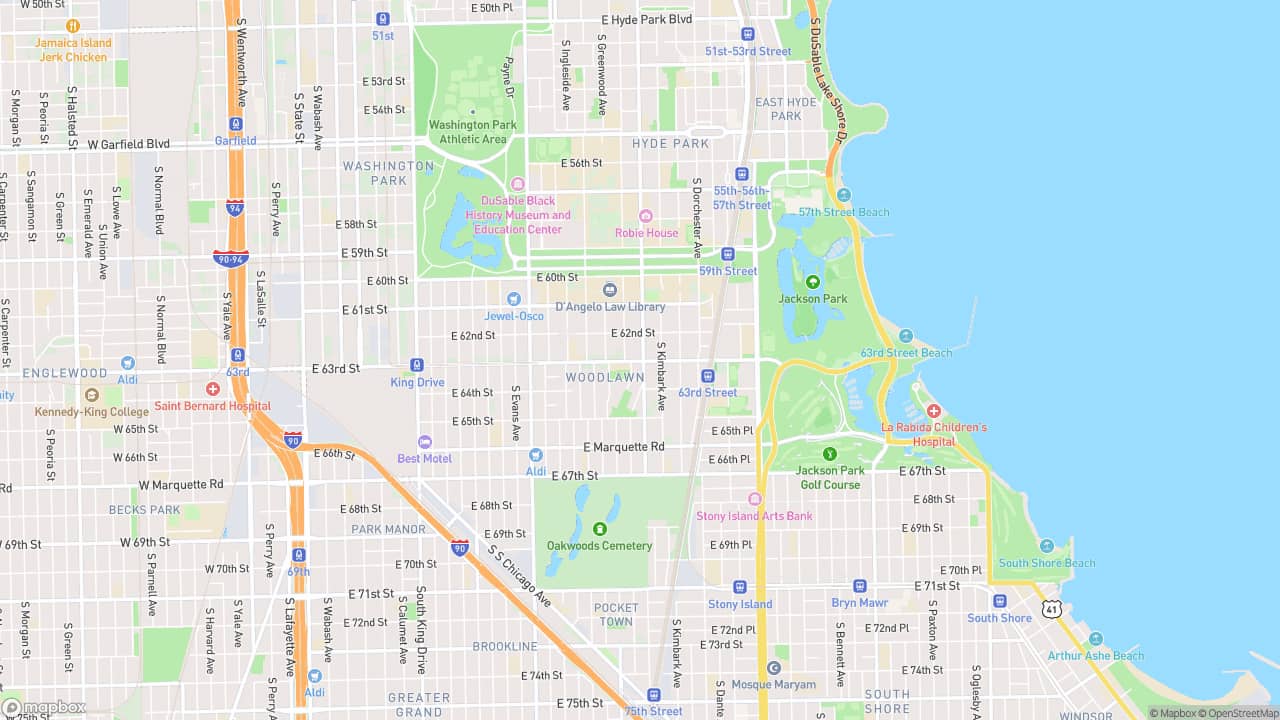
Woodlawn · Cook County · IL
Homes for sale in
Woodlawn.
- Active listings
- 0
- Median list
- $0
- Avg time on market
- 0 days
- Sold · last year
- 0
Active listings
0 homes on the market
No homes match these filters.
Beat the rest of the buyers
Be the first to know when a new Woodlawn home hits the market
Save the search and you will get a text and an email the moment a new listing matches. Most Woodlawn homes go under contract in the first week, the buyers who win are the ones who saw it first.
About the community
Living in Woodlawn.
Woodlawn sits on Chicago's South Side, roughly 8.5 miles south of the Loop, bounded by 60th and 61st Street on the north, 67th Street on the south, and Martin Luther King Drive on the west, immediately below Hyde Park and the University of Chicago. The neighborhood's biggest story is the Obama Presidential Center, an $850 million museum and library campus rising in adjacent Jackson Park. Getting downtown is easy: the CTA Green Line terminates at Cottage Grove and 63rd, and the Metra Electric District's 63rd Street station, originally named Woodlawn, runs north to Millennium Station. The housing stock leans toward historic greystones, two- and three-flats, and early-twentieth-century apartment buildings, much of it built before 1940. The University of Chicago, whose footprint reaches the neighborhood's northern edge, has been a major force in local investment and development. Woodlawn also carries a deep cultural history, having boomed into a dense entertainment and residential district in the decades after the 1893 World's Columbian Exposition. Home values here remain well below those of neighboring Hyde Park and Kenwood, making Woodlawn one of the more attainable lakefront-adjacent neighborhoods near the University of Chicago. To guard against displacement, the City of Chicago passed the 2020 Woodlawn Housing Preservation Ordinance, a package of affordable-housing protections tied to the Obama Center's arrival.
At a glance
Next to the University of Chicago
Woodlawn borders Hyde Park and the University of Chicago to the north across the Midway Plaisance.
Obama Presidential Center
An $850 million museum and library campus in adjacent Jackson Park, drawing major new investment to the area.
Transit-rich
CTA Green Line terminus at Cottage Grove and 63rd plus the Metra Electric 63rd Street station to Millennium Station.
Greystones and flats
A housing stock of historic greystones, two- and three-flats, and pre-1940 apartment buildings.
Jackson Park
The Olmsted-designed lakefront park, the Garden of the Phoenix, and the Wooded Island sit on the eastern edge.
Population ~23,956
Community area population per recent ACS estimates, down from a 1960 peak of 81,279.
Attainable home values
A typical home value around $263,000, well below neighboring Hyde Park and Kenwood.
What’s close
Woodlawn is organized around the 63rd Street and Cottage Grove Avenue corridors, with Jackson Park and the lakefront to the east and the University of Chicago just to the north across the Midway Plaisance.
- Obama Presidential Center and Jackson Park
- The Olmsted-designed lakefront park on the eastern edge, now home to the Obama Presidential Center campus.
- University of Chicago (north)
- Borders Woodlawn across the Midway Plaisance and serves as a major neighborhood employer and investor.
- CTA Green Line at Cottage Grove and 63rd
- The eastern terminus of the Green Line, with a rebuilt Woodlawn station at Cottage Grove.
- Metra Electric 63rd Street Station
- Originally named Woodlawn, this station runs north to downtown's Millennium Station.
- Midway Plaisance
- A mile-long Olmsted-designed greenway separating Woodlawn from Hyde Park, with a seasonal ice rink.
- Historic greystone blocks
- Tree-lined streets of classic Chicago greystones and early-twentieth-century flats.
What it’s actually like to live here
Woodlawn is a historic urban neighborhood in the middle of a long transition. It is dense and walkable, with a housing fabric of greystones, two- and three-flats, and vintage apartment buildings rather than suburban subdivisions, and its eastern edge opens onto the lakefront greenery of Jackson Park. Transit is a defining feature: the CTA Green Line terminates inside the neighborhood at Cottage Grove and 63rd, and the Metra Electric's 63rd Street station offers a fast ride to downtown's Millennium Station, which helps explain why a large share of households here get by without a car. The University of Chicago sits just to the north, lending the area a steady stream of students, faculty, and institutional investment.
The neighborhood blends long-time residents, many of them rooted here for generations, with newcomers drawn by relative affordability and proximity to the University of Chicago and the new Obama Presidential Center. Home values sit well below those of neighboring Hyde Park and Kenwood, making Woodlawn one of the more attainable options near the lakefront and the university. That same affordability has raised real concerns about displacement as the Obama Center opens, which is why the city's 2020 Woodlawn Housing Preservation Ordinance built in affordable-housing requirements and protections for existing renters and homeowners. The result is a neighborhood with deep cultural history, genuine momentum, and an active local conversation about who gets to share in its future.
Neighborhoods
Detailed Woodlawn community pages coming soon.
Browse the listings above. Detailed neighborhood pages with market stats, school info, and lifestyle take-downs land here as we roll them out.
Schools
Districts serving Woodlawn.
Boundary lines do shift. Always confirm in writing for a specific address before writing an offer.
- D299Grades PreK-12
Chicago Public Schools
Schools serving the area
- James Wadsworth STEM Elementary
- Carnegie Elementary School
- University of Chicago Charter School - Woodlawn Campus
- Hyde Park Academy High School
Woodlawn is served by Chicago Public Schools, District 299. CPS uses attendance-area boundaries for neighborhood schools but also offers extensive choice through magnet, selective-enrollment, and charter programs, so enrollment is not strictly tied to the home address. Verify current attendance boundaries and apply through GoCPS.
Around town
What there is to do in Woodlawn.
A handful of the places people who live here actually use. Not a directory.
- Parks
Jackson Park
Frederick Law Olmsted's lakefront park, remodeled for the 1893 World's Columbian Exposition, on Woodlawn's eastern edge.
- Culture
Obama Presidential Center
The $850 million Obama museum, library, and education campus in Jackson Park, a major draw for visitors to the South Side.
- Parks
Midway Plaisance
A mile-long Olmsted-designed greenway between Woodlawn and Hyde Park, with a seasonal ice-skating rink in winter.
- Culture
Garden of the Phoenix (Wooded Island)
A Japanese garden in Jackson Park dating to the 1893 fair, now home to Yoko Ono's permanent 'Sky Landing' sculpture.
- Food & Drink
Daley's Restaurant
Opened in 1892, one of Chicago's oldest continuously operating restaurants, now on the ground floor of the Woodlawn Green Line station.
- Culture
Museum of Science and Industry
Housed in the last surviving building of the 1893 World's Columbian Exposition, on the lakefront in adjacent Jackson Park.
Getting around
Commute + transit from Woodlawn.
- Stations: 63rd Street
- Terminal: Millennium Station
- Distance: 8.5 miles to downtown Chicago
- Routes: S Cottage Grove Avenue · E 63rd Street · S Stony Island Avenue · Lake Shore Drive / US 41 · I-90/94 Dan Ryan Expressway
- O'Hare Airport: ~51 min
- Chicago Loop: ~20 min
By the numbers
Woodlawn taxes + market stats.
Property tax rates vary by exact township and assessor district. Confirm per address before pricing a purchase.
Property tax rate
1.66%
effective avg
Sales tax
10.25%
combined
Median household income
$35,030
ACS
How Woodlawn got here
A bit of history.
Woodlawn began as a small settlement of Dutch farmers in the mid-nineteenth century, and before the 1890s its population never reached much beyond a thousand residents. Everything changed when the neighboring lakefront in Jackson Park was chosen as the site of the 1893 World's Columbian Exposition. The fair drew a flood of entrepreneurs, residents, and tourists, and hotels and apartment buildings went up rapidly, with tens of thousands of new residents moving into Woodlawn in the years that followed. Streetcar and elevated rail lines, including the elevated that terminated at 63rd and Cottage Grove and the Illinois Central commuter line, knit the district into the city and fueled its growth into a dense, lively residential and commercial neighborhood through the first half of the twentieth century.
Woodlawn's population peaked at 81,279 in 1960, by which point it had become a predominantly African American community. Disinvestment, demolition, and population loss followed over the next several decades, and by recent estimates the community area held roughly 23,956 residents. The University of Chicago, on Woodlawn's northern border, has had a long and sometimes fraught relationship with the neighborhood, and in recent years has been a significant investor in its redevelopment. The decision to build the Obama Presidential Center in adjacent Jackson Park triggered a new wave of attention and investment, and in September 2020 the Chicago City Council passed the Woodlawn Housing Preservation Ordinance, a set of affordable-housing measures, right-of-first-refusal protections, and homebuyer support programs intended to keep long-time residents in place as the area changes.
The questions buyers actually ask
Woodlawn FAQ
The questions I get most from buyers shopping Woodlawn. If yours isn't here, text 224-385-8779, same-day reply.
- What schools serve Woodlawn?
- Woodlawn is part of Chicago Public Schools, District 299. Neighborhood options include James Wadsworth STEM Elementary, Carnegie Elementary, and the University of Chicago Charter School's Woodlawn Campus, with Hyde Park Academy High School in the area. CPS also offers magnet, selective-enrollment, and charter choices through GoCPS, so check current boundaries and the application timeline before you buy.
- How is the commute downtown from Woodlawn?
- It is one of Woodlawn's strengths. The CTA Green Line terminates right in the neighborhood at Cottage Grove and 63rd, and the Metra Electric 63rd Street station runs north to Millennium Station in the Loop. Woodlawn sits about 8.5 miles south of downtown, and the average resident commute is around 32 minutes.
- What are property taxes like in Woodlawn?
- Woodlawn pays Cook County and City of Chicago property taxes. The median effective rate in Chicago is about 1.66 percent of market value, and homestead and senior exemptions can lower the bill. Assessments can also be appealed, so confirm the actual tax bill for any specific address.
- How much do homes cost in Woodlawn, and is it affordable?
- The typical Woodlawn home value is around $263,000 as of spring 2026. That is noticeably below neighboring Hyde Park and Kenwood, which makes Woodlawn one of the more attainable neighborhoods this close to the lakefront and the University of Chicago.
- How will the Obama Presidential Center affect Woodlawn?
- The $850 million Obama Presidential Center sits in adjacent Jackson Park and is projected to draw up to a million visitors a year. It has driven new investment and attention, and the city passed the 2020 Woodlawn Housing Preservation Ordinance to protect existing residents from displacement as values rise.
- Where should I start looking in Woodlawn?
- Buyers drawn to vintage character gravitate to the greystone and two- to three-flat blocks north of 63rd Street and near the University of Chicago and the Midway Plaisance, while the corridors closer to Jackson Park and the new Obama Center are seeing the most fresh investment. A local agent can help you weigh block-by-block differences and which streets are turning over fastest.
- Who is the real estate agent for Woodlawn?
- Joe Keegan is the local licensed Illinois real estate broker who covers Woodlawn in Woodlawn, IL through Subdiview, a neighborhood-first home search for the Chicago suburbs and collar counties. Joe prices and negotiates from the live MRED sold comps for Woodlawn specifically, not national averages, and can help you buy or sell here. Reach Joe at 224-385-8779 or joe@joekeeganhomes.com.
Your local agent
Joe knows Woodlawn
Most agents will list anything. I focus on the places I actually know, and the things that move value here don't show up in the MLS write-up: which streets and buildings hold demand, what the HOA or assessments really cover, how the comps read once you account for condition and location, and where buyers consistently want to be.
When you're ready to tour or list, you want someone who has read the last 50 closed comps in this specific market, not a national average, and can tell you what they actually mean for your price. That's how I work. Text or call any time, and I'll give you a real take, not a brochure.
- Licensed Illinois broker
- Comp-driven pricing
- Woodlawn specialist
- Honest local market take
- Brokerocity
Thinking of selling?
What's your home actually worth?
Not a Zestimate. A real CMA from someone who's sold this neighborhood, knows the floor plan premiums, and can tell you which upgrades the buyer pool here actually pays for.
- Pricing range with comp-by-comp logic
- Pre-list improvements that pay back, and the ones that don't
- No obligation, no spam, no auto-dialer