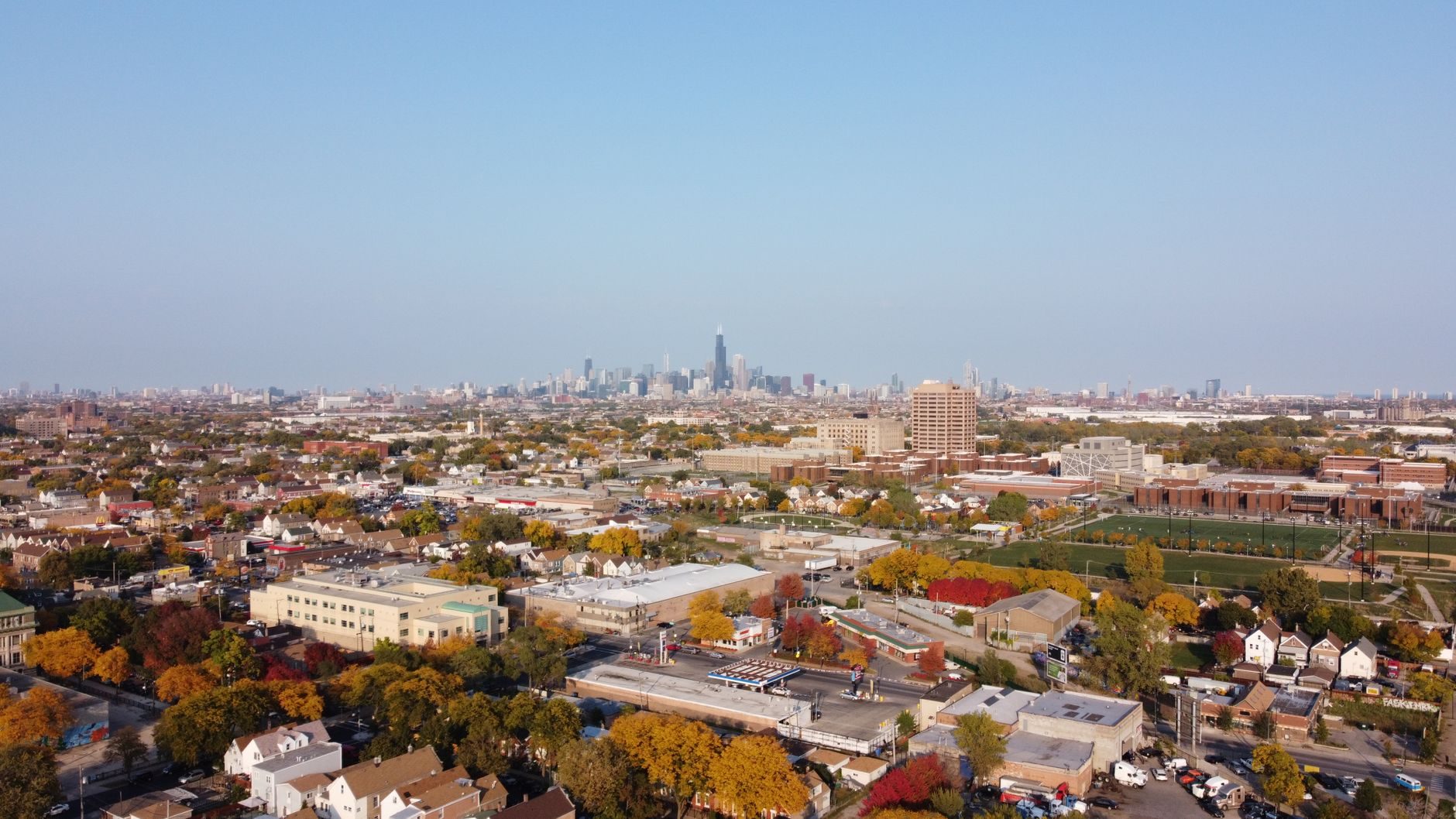
Lower West Side · Cook County · IL
Homes for sale in
Lower West Side.
- Active listings
- 6
- Median list
- $559K
- Avg time on market
- 69 days
- Sold · last year
- 62
Active listings
6 homes on the market


Be the first to know when a new Lower West Side home hits the market
Text + email the moment a new listing matches.
About the community
Living in Lower West Side.
The Lower West Side is community area 31, sitting about three miles southwest of the Loop and built around its best-known neighborhood, Pilsen. Spanning roughly 2.80 square miles between the Chicago River, the Stevenson Expressway, and Western Avenue, it is home to about 33,279 residents at a dense 11,900 people per square mile, a population that is roughly 68 percent Hispanic. The housing character is one of its biggest draws for buyers, with streets lined by vintage brick two-flats, three-flats, greystones, single-family cottages, and a growing wave of infill condominiums, many built in the 1880s and 1890s with distinctive Bohemian Baroque detailing. The history is layered, as late-19th-century Czech immigrants named the district after Plzen in today's Czech Republic, replacing earlier German and Irish settlers, and from the late 1960s onward it became the cultural heart of Chicago's Mexican-American community. In 2006 a large portion was listed on the National Register of Historic Places as the Pilsen Historic District. It suits buyers who want walkable, transit-rich, character-filled vintage housing with deep cultural roots, an art-and-food scene, and value upside as the area continues to draw infill development.
At a glance
Dense and walkable
Home to about 33,279 residents at roughly 11,900 people per square mile across 2.80 square miles, a dense, walkable urban fabric.
Vintage housing stock
The streets feature brick two-flats, three-flats, greystones, cottages, and newer condos, many dating to the 1880s and 1890s with Bohemian Baroque stonework.
Highly walkable
Pilsen carries a Walk Score in the high 80s, ranking among Chicago's more walkable neighborhoods where most errands can be done on foot.
National Museum of Mexican Art
Founded in 1982 and the largest Latino cultural institution in the U.S., located in Harrison Park with free admission to all.
World-class mural district
The 16th Street railroad embankment hosts about fifty street-art murals along a two-mile stretch, one of Chicago's largest concentrations of public art.
Home price character
In late 2025 the Pilsen Historic District had a median sale price around 567,000 dollars, while East Pilsen sat near 415,000 dollars.
Historic district status
In 2006 a large portion of Pilsen was listed on the National Register of Historic Places as the Pilsen Historic District.
Mexican-American heritage hub
First settled by Czechs who named it after Plzen, the area became the heart of Chicago's Mexican-American community from the late 1960s onward.
What it’s actually like to live here
Daily life on the Lower West Side centers on West 18th Street, an active commercial corridor lined with Mexican bakeries, restaurants, and groceries, while Halsted Street anchors one of Chicago's largest art districts. Commuting is a major selling point, as the CTA Pink Line runs three stops through the community area, including the 18th station, and the ride from 18th Street to the Loop is roughly 15 minutes. The neighborhood is served by several CTA bus routes plus nearby Metra stations and Stevenson Expressway access, with bikeways on Blue Island Avenue, 18th, and Halsted Streets reinforcing a Walk Score in the high 80s.
The arts-and-food scene is the neighborhood's signature. Pilsen is famous for its murals and street art, including roughly fifty works along the two-mile 16th Street railroad embankment and the colorful platform art at the 18th Street Pink Line station. The National Museum of Mexican Art, founded in 1982 and free to enter, sits inside Harrison Park, an 18.58-acre green space along West 18th Street with an indoor pool, gymnasium, tennis and basketball courts, ball fields, and a playground. Authentic Mexican dining is a community fixture, anchored by spots like Carnitas Uruapan, and a strong vintage-shopping culture runs along 18th Street, giving the area a tight-knit, creative, culturally proud character.
Around town
What there is to do in Lower West Side.
A handful of the places people who live here actually use. Not a directory.
- Culture
National Museum of Mexican Art
The largest Latino cultural institution in the U.S., founded in 1982 and located in Harrison Park, with free admission and a permanent collection of Mexican art and artifacts.
- Culture
Thalia Hall
A Romanesque Revival music hall built in 1892 and reopened in 2014 as a concert venue at 1807 South Allport Street, with bars and a restaurant in the same building.
- Culture
16th Street Murals
About fifty street-art murals line the two-mile railroad embankment along 16th Street from Halsted west to Western Avenue, featuring local and international artists.
- Parks
Harrison (Carter) Park
An 18.58-acre park along West 18th Street with an indoor pool, gymnasium, gymnastics center, tennis and basketball courts, ball fields, and a playground, adjacent to the National Museum of Mexican Art.
- Food & Drink
Carnitas Uruapan
A Pilsen institution founded in 1975 at 1725 West 18th Street, known for Michoacan-style carnitas slow-cooked until crisp and tender.
- Shopping
Knee Deep Vintage
A well-loved vintage clothing and housewares shop at 1219 West 18th Street, part of Pilsen's vintage-shopping corridor.
By the numbers
Lower West Side taxes + market stats.
Property tax rates vary by exact township and assessor district. Confirm per address before pricing a purchase.
Median sold price
$508,000
MRED · last 12 mo (62 sales)
How Lower West Side got here
A bit of history.
In the mid-19th century the Lower West Side was settled by German and Irish immigrants who lived in poor, overcrowded conditions, and a cholera outbreak eventually pushed many of them to leave. By the late 19th century the area was dominated by Czech immigrants, who became its most prominent group and named the district after Plzen, known in German as Pilsen, the fourth-largest city in today's Czech Republic. They were joined by Poles, Italians, Slovaks, Slovenes, Croats, and other groups largely of Slavic descent, many of whom worked in the nearby stockyards and factories. This Bohemian era gave Pilsen its enduring architecture, with brick and stone two-flats, greystones, and cottages built in the 1880s and 1890s in Italianate, Romanesque, and Queen Anne styles, plus the locally distinctive Bohemian Baroque detailing recognized when the Pilsen Historic District was listed on the National Register in 2006.
The neighborhood's second great chapter began in the late 1960s, when large numbers of Latinos, many displaced by the construction of the University of Illinois at Chicago and other urban-renewal projects, moved into Pilsen. By 1970 Latinos had become the majority, surpassing residents of Eastern European descent, and through the 1980s and 1990s the Mexican-origin community grew so substantially that a large share of the Chicago area's Mexican-origin population lived in Pilsen during that period. A defining moment came in 1974, when, after years of protests and boycotts, the Board of Education approved funding to build a neighborhood high school, and Benito Juarez Community Academy opened in 1977. Census figures show some gentrification and a decline in the Mexican-American population from 2000 to 2010, prompting local advocacy groups to push to preserve the area's Mexican-American culture.
The questions buyers actually ask
Lower West Side FAQ
The questions I get most from buyers shopping Lower West Side. If yours isn't here, text 224-385-8779, same-day reply.
- What kinds of homes can I buy in Pilsen and the Lower West Side?
- The housing stock is dominated by vintage brick two-flats, three-flats, greystones, and single-family cottages, many built in the 1880s and 1890s, alongside a growing supply of newer infill condominiums and townhomes. Much of the area falls within the Pilsen Historic District, listed on the National Register of Historic Places in 2006, so many buildings carry distinctive Bohemian Baroque stone and brick detailing. Two-flats and three-flats are popular with buyers who want to live in one unit and rent the others. The east side of the neighborhood has seen the most new condo and single-family infill construction.
- What do homes cost here right now?
- In late 2025, the Pilsen Historic District had a median sale price of about 567,000 dollars, up roughly 13 percent from a year earlier, with a median price per square foot around 289 dollars. The smaller East Pilsen area sold at a median near 415,000 dollars. Prices vary widely by building type and condition, since a multi-unit greystone trades very differently from a renovated condo. Year-over-year appreciation in both submarkets suggests continued demand.
- How is the commute downtown?
- Commuting is one of the area's strengths. The CTA Pink Line runs three stations through the community area, and the ride from the 18th Street station to the Loop is roughly 15 minutes. Several CTA bus routes also serve the neighborhood, and the Stevenson Expressway has exits at Damen and Ashland for drivers. The neighborhood also carries a Walk Score in the high 80s, so many daily errands can be done on foot.
- What are the schools like?
- Residents are served by Chicago Public Schools, with Benito Juarez Community Academy as the main neighborhood high school, while other parts are zoned to Thomas Kelly High School. Benito Juarez opened in 1977 after a community campaign and a major city investment, and its building is decorated with murals celebrating Mexican culture. The area also has several elementary and dual-language options such as Whittier Dual Language and Orozco Community Academy, plus private and Catholic schools like Cristo Rey Jesuit High School. Buyers should verify current attendance boundaries with the CPS School Locator before purchasing.
- What is the arts and dining scene really like?
- Pilsen is one of Chicago's most celebrated arts neighborhoods, with murals and street art throughout, including about fifty works along the two-mile 16th Street embankment and the painted 18th Street Pink Line platform. The free National Museum of Mexican Art, the largest Latino cultural institution in the U.S., anchors the cultural identity, and the historic Thalia Hall hosts live music in a restored 1892 venue. West 18th Street is packed with Mexican bakeries, restaurants, and groceries, with longtime favorites like Carnitas Uruapan. Vintage shops such as Knee Deep Vintage round out a creative, walkable commercial strip.
- Is the area gentrifying, and what does that mean for value?
- Yes. Census figures show measurable gentrification from 2000 to 2010, with a decline in the Mexican-American population concentrated in Pilsen, alongside a rise in single-person households. The east side of the neighborhood is one of Chicago's active areas for infill condominium and single-family construction. Recent data shows double-digit year-over-year price gains in both the Pilsen Historic District and East Pilsen, signaling a strong value trajectory. Local advocacy groups continue to push to preserve Mexican-American culture, so buyers should weigh both the appreciation potential and the community's ongoing efforts to maintain its character.
- Who is the real estate agent for Lower West Side?
- Joe Keegan is the local licensed Illinois real estate broker who covers Lower West Side in Lower West Side, IL through Subdiview, a neighborhood-first home search for the Chicago suburbs and collar counties. Joe prices and negotiates from the live MRED sold comps for Lower West Side specifically, not national averages, and can help you buy or sell here. Reach Joe at 224-385-8779 or joe@joekeeganhomes.com.
Nearby
Neighborhoods near Lower West Side.
If you’re cross-shopping the area, these are the neighborhoods right next to Lower West Side.
Your local agent
Joe knows Lower West Side
Most agents will list anything. I focus on the places I actually know, and the things that move value here don't show up in the MLS write-up: which streets and buildings hold demand, what the HOA or assessments really cover, how the comps read once you account for condition and location, and where buyers consistently want to be.
When you're ready to tour or list, you want someone who has read the last 50 closed comps in this specific market, not a national average, and can tell you what they actually mean for your price. That's how I work. Text or call any time, and I'll give you a real take, not a brochure.
- Licensed Illinois broker
- Comp-driven pricing
- Lower West Side specialist
- Honest local market take
- Brokerocity
Thinking of selling?
What's your home actually worth?
Not a Zestimate. A real CMA from someone who's sold this neighborhood, knows the floor plan premiums, and can tell you which upgrades the buyer pool here actually pays for.
- Pricing range with comp-by-comp logic
- Pre-list improvements that pay back, and the ones that don't
- No obligation, no spam, no auto-dialer