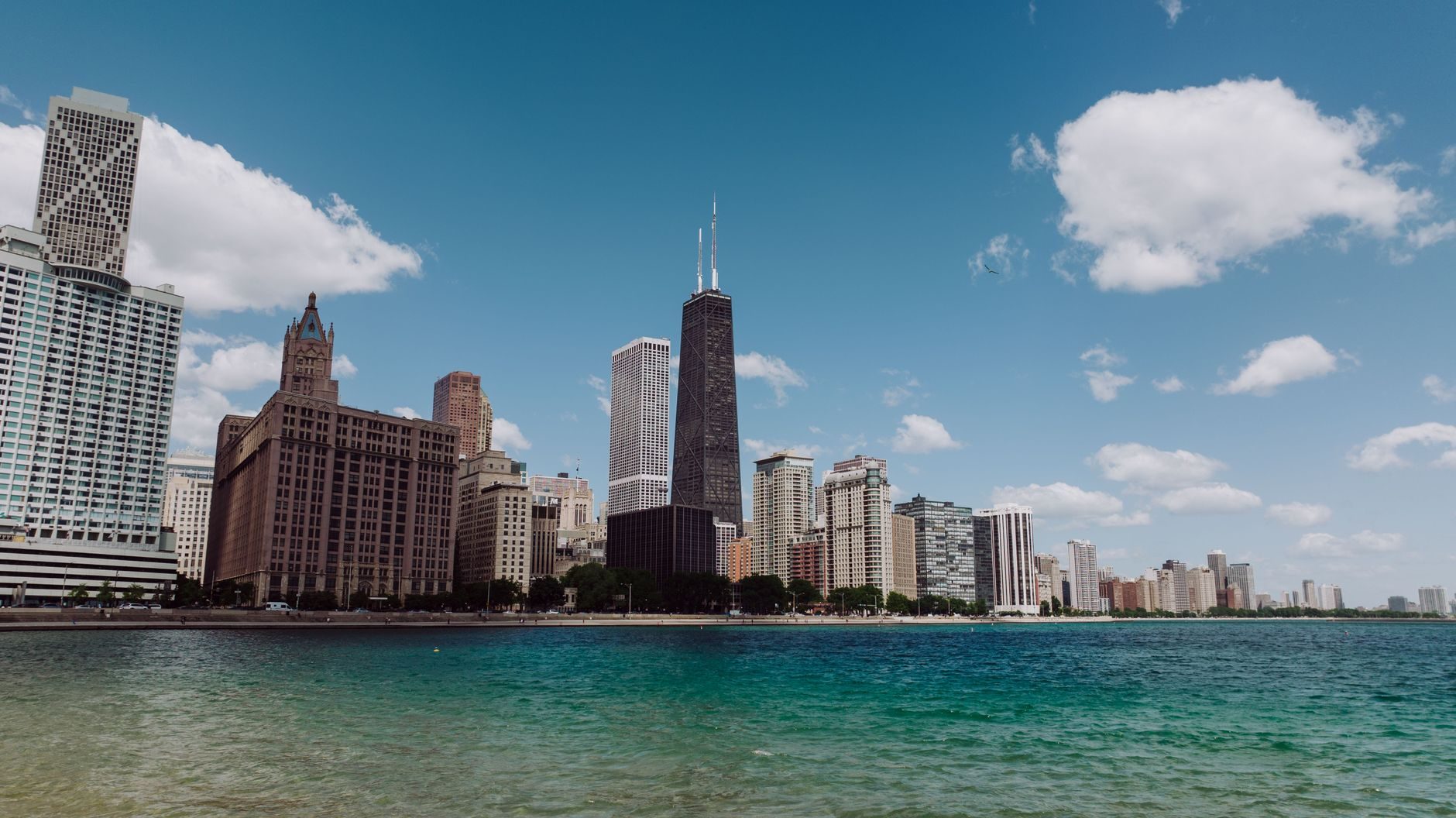
Chinatown · Cook County · IL
Homes for sale in
Chinatown.
- Active listings
- 0
- Median list
- $0
- Avg time on market
- 0 days
- Sold · last year
- 14
Active listings
0 homes on the market
No homes match these filters.
Beat the rest of the buyers
Be the first to know when a new Chinatown home hits the market
Save the search and you will get a text and an email the moment a new listing matches. Most Chinatown homes go under contract in the first week, the buyers who win are the ones who saw it first.
About the community
Living in Chinatown.
Chinatown sits on the South Side of Chicago, roughly two miles south of the Loop, anchored along South Wentworth Avenue between Cermak Road and West 26th Street within the Armour Square community area in ZIP 60616. The neighborhood took shape around 1912, when Chinese residents moved south from their first enclaves near the Loop, a relocation driven by rising rents, discrimination, and the impending construction of a federal building in the old district. More than a third of Chicago's Chinese population lives here, making it one of the largest concentrations of Chinese Americans in the United States. Today it is a dense, pedestrian-first neighborhood of banks, restaurants, grocers, gift shops, and traditional-medicine stores, with the ceremonial Chinatown Gate framing Wentworth and a mix of vintage two-flats, townhomes, condominiums, and newer infill near Chinatown Square and Ping Tom Memorial Park. Transit is a defining advantage, as the CTA Red Line, the system's busiest route, stops 24 hours a day at the Cermak-Chinatown station in the heart of the neighborhood, and the Dan Ryan and Stevenson expressways meet at its southern edge. For buyers, Chinatown offers a rare combination of walkability, round-the-clock rapid transit, riverfront parkland, and a stable, growing community that, unlike many Chinatowns nationwide, has largely resisted population decline.
At a glance
24/7 Red Line access
The Cermak-Chinatown station serves the CTA Red Line, the system's busiest route, with around-the-clock service in the heart of the neighborhood.
Walk Score
A representative Chinatown location scores 95 out of 100 for walkability, meaning daily errands rarely require a car.
Transit and Bike Score
The same location carries a Transit Score of 78, rated excellent transit, and a Bike Score of 82, rated very bikeable.
Chinese community
More than a third of Chicago's Chinese population lives here, one of the largest concentrations of Chinese Americans in the country.
Median home price
As of the most recent Redfin neighborhood data in July 2025, Chinatown homes sold at a median of about 398,000 dollars, up 27.2 percent year over year, at roughly 304 dollars per square foot.
Riverfront park
Ping Tom Memorial Park spans about 17.24 acres along the Chicago River, with a pagoda-style pavilion, boathouse, and fieldhouse with an indoor pool.
Nine Dragon Wall
A glazed-tile replica of Beijing's Beihai Park wall, erected in 2004, is one of only a few such walls outside Beijing.
Award-winning library
The Chinatown Branch Library at 2100 South Wentworth, designed by Skidmore, Owings and Merrill, won the 2016 AIA and ALA Library Building Award.
What it’s actually like to live here
Daily life in Chinatown revolves around a compact, intensely walkable core where most errands can be done on foot, reflected in a 95 Walk Score for a representative neighborhood location. Wentworth Avenue and Chinatown Square are lined with banks, gift shops, grocers, traditional Chinese-medicine stores, and a deep bench of dim sum houses, bakeries, and restaurants that draw both residents and visitors from across the Midwest. Transit is exceptional, as the Cermak-Chinatown Red Line station runs 24 hours a day in the center of the neighborhood, supplemented by CTA bus routes on Wentworth, Canal, Cermak, and Archer, and a seasonal water taxi that connects Michigan Avenue to Ping Tom Memorial Park along the Chicago River. The Dan Ryan and Stevenson expressways meet at the south edge, giving drivers quick highway access one block east of Wentworth.
For recreation, the roughly 17-acre Ping Tom Memorial Park offers a Chinese-style pavilion, riverfront paths, a boathouse with summer kayak rentals, and a fieldhouse with an indoor pool and fitness center. The housing market has been strong, with the most recent Redfin neighborhood data in July 2025 showing a median sale price around 398,000 dollars, up 27.2 percent year over year. Culturally, the neighborhood is rich, as the Chinese American Museum of Chicago documents Chinese American life in the Midwest, the architecturally celebrated Chinatown Branch Library anchors the northern end, and public art such as the Nine Dragon Wall and the Chinatown Gate signal the district's identity. Annual celebrations including the Double Ten Parade with lion dances reinforce a community that, unlike many Chinatowns nationwide, has kept growing rather than shrinking.
Around town
What there is to do in Chinatown.
A handful of the places people who live here actually use. Not a directory.
- Parks
Ping Tom Memorial Park
A roughly 17-acre riverfront park on the northern edge of Chinatown with a pagoda-style Chinese pavilion, a boathouse offering summer kayak rentals, and a fieldhouse with an indoor pool. It is one of the most scenic green spaces on the near South Side.
- Food & Drink
Chinatown Square
A two-level outdoor mall opened in the early 1990s on former Santa Fe Railway land, lined with restaurants, shops, and sculptures of the twelve Chinese zodiac animals. It is a central gathering and dining hub for the neighborhood.
- Culture
Nine Dragon Wall
A glazed-tile replica of the famous wall in Beijing's Beihai Park, erected in 2004 and one of only a few such walls outside Beijing. Its nine large dragons and hundreds of smaller ones symbolize good fortune.
- Culture
Chinese American Museum of Chicago
Located at 238 West 23rd Street, this museum advances appreciation of Chinese American culture through exhibits, education, and research focused on the Midwest. It reopened in 2010 after a 2008 fire with improved facilities.
- Culture
Chinatown Branch Library
An award-winning library at 2100 South Wentworth designed by Skidmore, Owings and Merrill, winner of the 2016 AIA and ALA Library Building Award. It sits directly beside the Cermak-Chinatown Red Line stop.
- Food & Drink
Dim Sum and Chinatown Dining
Wentworth Avenue and Chinatown Square host a deep concentration of dim sum houses, bakeries, and Cantonese restaurants that draw diners from across the Chicago region. The neighborhood is a regional destination for authentic Chinese cuisine.
By the numbers
Chinatown taxes + market stats.
Property tax rates vary by exact township and assessor district. Confirm per address before pricing a purchase.
Median sold price
$332,000
MRED · last 12 mo (14 sales)
How Chinatown got here
A bit of history.
The first Chinese residents arrived in Chicago after 1869, following the completion of the first transcontinental railroad and fleeing anti-Chinese violence and discrimination on the West Coast. By the late 1800s, about a quarter of the city's roughly 600 Chinese residents had settled along Clark Street between Van Buren and Harrison in the Loop, where grocers, restaurants, laundries, and family associations formed the original Chinatown. That early community prospered, but the renewal of the Chinese Exclusion Act in 1892, the 1893 World's Columbian Exposition, rising rents charged to Chinese businesses, overcrowding, and the planned construction of a federal building on the district all combined to push residents elsewhere. Around 1912, about half of the Chinese population moved roughly two miles south to Armour Square, and the area near Wentworth Avenue and Cermak Road was proclaimed the New Chinatown.
The move was organized largely by the On Leong Merchants Association, which in 1912 built a structure on Cermak Road, then 22nd Street, housing 15 stores, 30 apartments, and the association's headquarters at a cost of 200,000 dollars. In the 1920s, community leaders secured roughly 50 ten-year leases through an intermediary because of racial discrimination, and the landmark On Leong Merchants Association Building, now the Pui Tak Center, opened in 1928 as the finest Chinese-style structure in any North American Chinatown. Later milestones reshaped the neighborhood again, as the Chinatown Gateway was built in 1975, Chinatown Square opened as a two-level mall in the early 1990s on former Santa Fe Railway land, and Ping Tom Memorial Park opened along the Chicago River in 1999.
The questions buyers actually ask
Chinatown FAQ
The questions I get most from buyers shopping Chinatown. If yours isn't here, text 224-385-8779, same-day reply.
- What kinds of homes are available in Chinatown, and what do they cost?
- Chinatown offers a mix of vintage two-flats, townhomes, condominiums, and newer infill construction, much of it concentrated near Chinatown Square and the riverfront. According to the most recent Redfin neighborhood data in July 2025, the median sale price was about 398,000 dollars, up 27.2 percent year over year, at roughly 304 dollars per square foot. The market has been active, with homes selling in about 55 days. Pricing sits in a moderate range for the city, below downtown but well above the South Side's least expensive neighborhoods.
- How is the commute to downtown Chicago?
- It is excellent. The CTA Red Line, the system's busiest route, stops 24 hours a day at the Cermak-Chinatown station right in the neighborhood, putting the Loop only a few stops north. A representative Chinatown location carries a Transit Score of 78, rated excellent transit. Drivers also benefit from the Dan Ryan and Stevenson expressways meeting at the south edge, with highway access one block east of Wentworth. A seasonal water taxi adds a scenic river route downtown in summer.
- What are the schools like?
- Chinatown residents are zoned to Chicago Public Schools, including John C. Haines Elementary and Phillips Academy High School. The neighborhood also has private options such as St. Therese Chinese Catholic School, a K-8 school established in 1941, and the Pui Tak Christian School, a pre-kindergarten through 8th grade school. Families should verify current attendance boundaries directly with CPS, since zoning can change.
- What is there to do for recreation?
- The standout is Ping Tom Memorial Park, a roughly 17-acre riverfront park with a Chinese pavilion, walking paths, a boathouse offering summer kayak rentals, and a fieldhouse with an indoor pool and fitness center. The neighborhood is highly walkable and bikeable, with a representative Bike Score of 82. Beyond the park, the Chinatown Branch Library and a dense commercial core mean entertainment, dining, and culture are all within a short walk.
- How is the dining and cultural scene?
- Chinatown is a regional destination for Chinese cuisine, with dim sum houses, bakeries, and restaurants clustered along Wentworth Avenue and in Chinatown Square. Cultural anchors include the Chinese American Museum of Chicago, the Nine Dragon Wall, the ceremonial Chinatown Gate, and annual events such as the Double Ten Parade featuring lion dances. It functions as a community and business hub for Chinese residents across the Chicago metropolitan area and the Midwest.
- What is the overall character of the neighborhood?
- Chinatown is a dense, walkable, and culturally distinct enclave where more than a third of Chicago's Chinese population lives, one of the largest such concentrations in the United States. Unlike many Chinatowns nationwide that have faced decline or gentrification pressure, Chicago's has maintained steady population growth. Buyers can expect a tight-knit community, strong transit, riverfront green space, and a vibrant commercial core, balanced against the density and limited owner-occupancy typical of an urban near-downtown neighborhood.
- Who is the real estate agent for Chinatown?
- Joe Keegan is the local licensed Illinois real estate broker who covers Chinatown in Chinatown, IL through Subdiview, a neighborhood-first home search for the Chicago suburbs and collar counties. Joe prices and negotiates from the live MRED sold comps for Chinatown specifically, not national averages, and can help you buy or sell here. Reach Joe at 224-385-8779 or joe@joekeeganhomes.com.
Nearby
Neighborhoods near Chinatown.
If you’re cross-shopping the area, these are the neighborhoods right next to Chinatown.
Your local agent
Joe knows Chinatown
Most agents will list anything. I focus on the places I actually know, and the things that move value here don't show up in the MLS write-up: which streets and buildings hold demand, what the HOA or assessments really cover, how the comps read once you account for condition and location, and where buyers consistently want to be.
When you're ready to tour or list, you want someone who has read the last 50 closed comps in this specific market, not a national average, and can tell you what they actually mean for your price. That's how I work. Text or call any time, and I'll give you a real take, not a brochure.
- Licensed Illinois broker
- Comp-driven pricing
- Chinatown specialist
- Honest local market take
- Brokerocity
Thinking of selling?
What's your home actually worth?
Not a Zestimate. A real CMA from someone who's sold this neighborhood, knows the floor plan premiums, and can tell you which upgrades the buyer pool here actually pays for.
- Pricing range with comp-by-comp logic
- Pre-list improvements that pay back, and the ones that don't
- No obligation, no spam, no auto-dialer