Archer Heights · Cook County · IL
Homes for sale in
Archer Heights.
- Active listings
- 0
- Median list
- $0
- Avg time on market
- 0 days
- Sold · last year
- 34
Active listings
0 homes on the market
No homes match these filters.
Beat the rest of the buyers
Be the first to know when a new Archer Heights home hits the market
Save the search and you will get a text and an email the moment a new listing matches. Most Archer Heights homes go under contract in the first week, the buyers who win are the ones who saw it first.
About the community
Living in Archer Heights.
Archer Heights is Community Area 57, one of Chicago's 77 official community areas, sitting on the Southwest Side roughly seven miles from the Loop. The neighborhood is bounded by the Stevenson Expressway, Interstate 55, to the north, the CTA Orange Line to the south, the Corwith railyard to the east, and railroad tracks and Knox Avenue to the west, covering about 2.01 square miles. As of the 2020 Census it was home to 14,196 residents, a density of roughly 7,060 people per square mile. The community takes its name from Archer Avenue, the diagonal commercial spine that runs from south of downtown out through the Southwest Side along what was once a Native American trail. Housing here is dominated by the sturdy brick bungalows and two-flats of Chicago's Bungalow Belt, a stock prized by buyers for its solid construction, affordability, and tidy residential blocks. Demographically the neighborhood is majority Hispanic, primarily Mexican, at about 77.4 percent, with a long-standing Polish community so durable that you can still hear Polish spoken on many blocks, plus White at 15.4 percent and Asian at 6.0 percent residents. With a median household income near 50,458 dollars, walkable retail along Archer Avenue, and Orange Line access nearby, Archer Heights appeals to first-time buyers and families seeking value, transit, and an established immigrant-rooted community character.
At a glance
Community Area 57
Archer Heights is one of Chicago's 77 official community areas, located on the Southwest Side roughly seven miles from the Loop.
Population
The 2020 Census counted 14,196 residents across roughly 2.01 square miles, a density of about 7,060 people per square mile.
Walk Score
Archer Heights is rated very walkable with a Walk Score of 78, alongside a Transit Score of 57 and a Bike Score of 57.
Median home price
Redfin reported a median sale price of roughly 356,500 dollars in February 2026, up sharply year over year, with homes selling in about 42 days.
Heritage
The neighborhood is roughly 77.4 percent Hispanic, primarily Mexican, with a durable Polish community and 15.4 percent White residents.
Orange Line at Pulaski
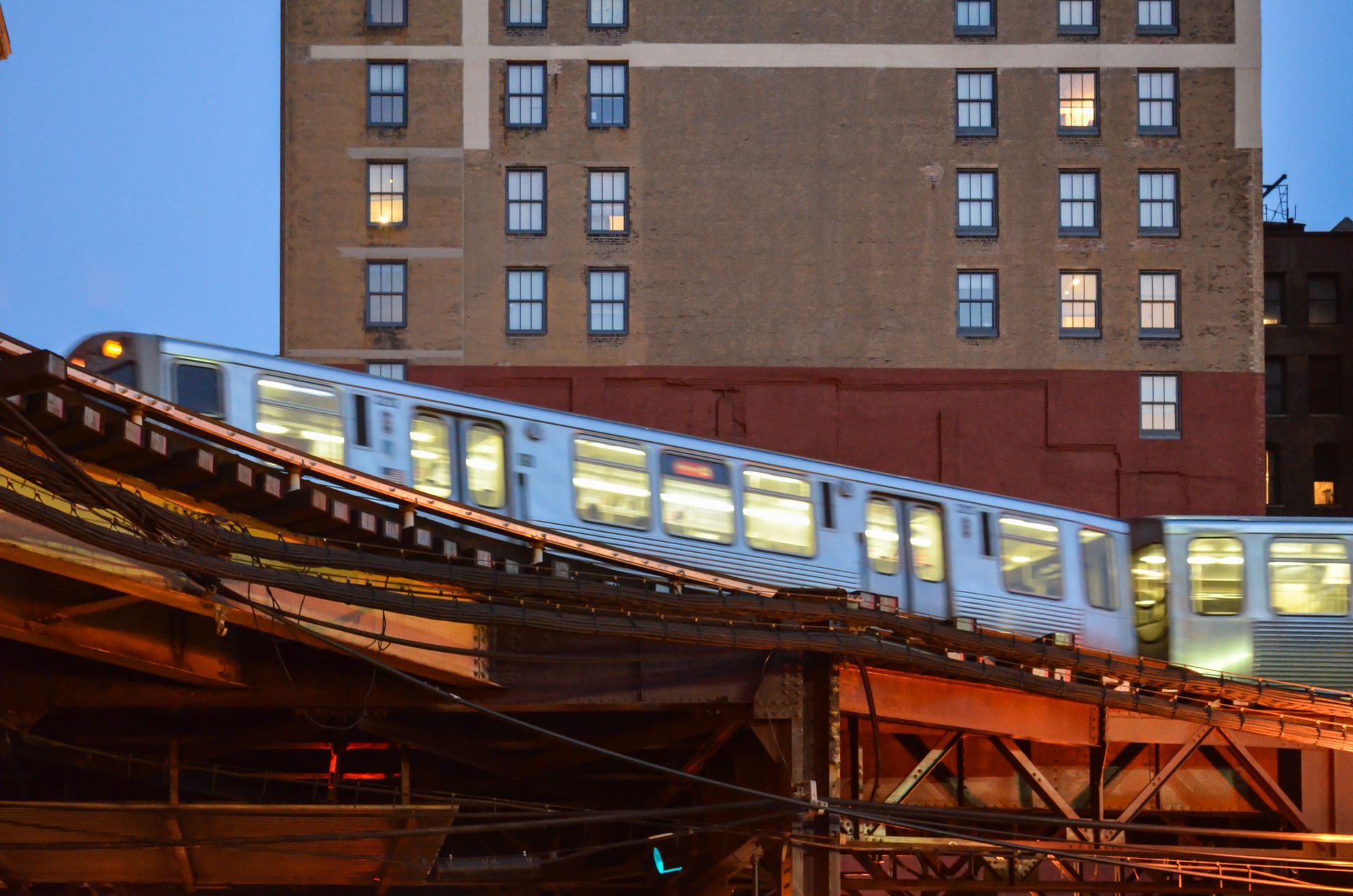
The CTA Orange Line opened in 1993, and the Pulaski station at Pulaski Road and 51st Street serves the area with quick service to the Loop and Midway.
Archer Park
The neighborhood's signature park totals 14.06 acres with a fieldhouse, gymnasium, ballfields, and a water spray feature.
Archer Heights Library
The branch at 5055 South Archer Avenue offers Polish and Spanish language materials, homework help, and a meeting room.
What it’s actually like to live here
Daily life in Archer Heights revolves around its quiet residential blocks of brick bungalows and the busy diagonal of Archer Avenue, the neighborhood's commercial and dining spine. The area is rated very walkable at 78, with most errands doable on foot and roughly 68 restaurants, bars, and coffee shops in or near the neighborhood. Transit is anchored by the CTA Orange Line, which opened in 1993, and the Pulaski station at Pulaski Road and 51st Street puts the Loop and Midway Airport within a quick ride, with trains roughly every ten minutes at rush hour and connecting CTA bus routes. The Stevenson Expressway forms the northern edge and gives drivers a fast route downtown and to the suburbs. Several CTA bus lines pass through the community, and the neighborhood earns a Transit Score of 57.
For a home buyer, the draw is value, with a Redfin median sale price around 356,500 dollars in early 2026, well below citywide medians, and the durable bungalow and two-flat stock that defines Chicago's Bungalow Belt. Green space is led by the 14.06-acre Archer Park, with its fieldhouse, gymnasium, ballfields, basketball court, soccer and football field, and summer day camp, plus Curie Park on Archer Avenue and smaller neighborhood parks. The Archer Heights branch library at 5055 South Archer Avenue offers Polish and Spanish language collections, book clubs, and family programming, reflecting the area's heritage. Dining and shopping skew toward family-owned Mexican and Polish establishments along Archer Avenue, and long-running parish festivals such as the St. Richard Family Fest add to the neighborhood's tight community feel.
Around town
What there is to do in Archer Heights.
A handful of the places people who live here actually use. Not a directory.
- Parks
Archer (William Beatty) Park
The neighborhood's flagship park totals 14.06 acres at 4901 South Kilbourn Avenue, with a fieldhouse, gymnasium, ballfields, basketball court, a football and soccer field, a playground, and a summer water spray feature. It hosts Movies in the Parks and a six-week summer day camp.
- Parks
Curie Park
Named for Marie Curie and located at 4949 South Archer Avenue on the neighborhood's main artery, this Chicago Park District park offers neighborhood recreation and programming close to the Pulaski Orange Line stop.
- Culture
Archer Heights Branch Library
The branch at 5055 South Archer Avenue offers Polish and Spanish language materials, homework help, a meeting room, and regular book clubs and family story times, reflecting the neighborhood's heritage.
- Food & Drink
Archer Avenue Dining Corridor
The diagonal Archer Avenue spine concentrates family-owned Mexican and Polish restaurants, bakeries, and shops, with roughly 68 restaurants, bars, and coffee shops in and around the neighborhood.
- Recreation
Pulaski Orange Line Station
At Pulaski Road and 51st Street, this CTA Orange Line stop is the neighborhood's rapid-transit gateway, connecting Archer Heights to the Loop and Midway Airport with frequent rush-hour service and bus connections.
- Culture
St. Richard Family Fest
A long-running parish festival tied to St. Richard Parish, this annual carnival and its Rocket Run 5K is one of the neighborhood's signature community gatherings, alongside the St. Bruno Catholic Church Carnival.
By the numbers
Archer Heights taxes + market stats.
Property tax rates vary by exact township and assessor district. Confirm per address before pricing a purchase.
Median sold price
$350,000
MRED · last 12 mo (34 sales)
How Archer Heights got here
A bit of history.
The land that became Archer Heights was originally inhabited by Native American tribes, and Archer Avenue itself follows the route of an old Native American trail. In the nineteenth century, land speculators and farmers turned attention to the swampy ground, which drew developers and manufacturers. The area gained its name from Colonel William Beatty Archer, who lived from 1793 to 1870, an Illinois and Michigan Canal commissioner, civil engineer, and abolitionist who also nominated Abraham Lincoln for Vice President in 1856. After speculators arrived around 1900 and developed the southern sections for residential use, railroads kept control of much of the north-side real estate. The spread of horse cars in the late 1890s and electric streetcars in the early 1900s brought immigrant laborers into the neighborhood.
Archer Heights saw its largest population growth in the 1920s and 1930s, drawing Polish, Italian, Czech, and Russian Jewish families, and two Catholic parishes, St. Bruno's in 1925 and St. Richard's in 1938, anchored the community. The population grew from 8,120 in 1930 to a peak of 11,143 by 1970 before easing in later decades. For more than 90 years the neighborhood was predominantly White with a strong Polish cohort, but beginning around 2000 it became, in the words of local historians, the latest swath of the Southwest Side bungalow belt where Hispanics, primarily Mexicans, became the majority. The Archer Heights Civic Association, founded in 1938, is the oldest active neighborhood organization in Southwest Chicago and helped win the Archer Park fieldhouse, which opened in 1970.
The questions buyers actually ask
Archer Heights FAQ
The questions I get most from buyers shopping Archer Heights. If yours isn't here, text 224-385-8779, same-day reply.
- What kinds of homes can I buy in Archer Heights and how much do they cost?
- Archer Heights sits squarely in Chicago's Bungalow Belt, so the housing stock is dominated by sturdy brick bungalows and two-flats on tidy residential blocks. Redfin reported a median sale price of roughly 356,500 dollars in early 2026, which is well below many North Side neighborhoods and citywide medians. Homes here tend to move at a steady pace, selling in about 42 days on average. The combination of solid older construction and relative affordability makes the area popular with first-time buyers and families.
- How is the commute to downtown Chicago?
- The neighborhood is about seven miles from the Loop and has multiple fast options. The CTA Orange Line, which opened in 1993, stops at Pulaski station at Pulaski Road and 51st Street and runs to the Loop and Midway Airport, with trains roughly every ten minutes at rush hour. The Stevenson Expressway forms the northern boundary and gives drivers a direct route downtown and out to the suburbs. Several CTA bus lines also pass through the community, and the area carries a Transit Score of 57.
- What are the schools like?
- Chicago Public Schools operates district-run schools in Archer Heights, including Edwards Elementary School at 4815 South Karlov Avenue. Several charter schools also serve the area, and Curie Metropolitan High School sits nearby at Archer Avenue and Pulaski Road. There are also Catholic parish elementary schools, St. Richard School and St. Bruno School, tied to the neighborhood's long-standing parishes. Buyers should verify current attendance boundaries and program offerings directly with CPS.
- What is there to do for recreation and outdoors?
- The centerpiece is Archer Park, a 14.06-acre Chicago Park District park with a fieldhouse, gymnasium, ballfields, a basketball court, a soccer and football field, a playground, and a summer water spray feature, plus a popular six-week day camp. Curie Park on Archer Avenue and smaller neighborhood parks add more green space. The Archer Heights library branch on Archer Avenue offers homework help, book clubs, and family programming. Movies in the Parks and parish festivals round out the seasonal calendar.
- What is the dining and cultural scene like?
- Archer Avenue is the neighborhood's commercial and dining spine, lined with family-owned Mexican and Polish restaurants, bakeries, and shops that reflect the area's heritage. There are roughly 68 restaurants, bars, and coffee shops in and around the neighborhood, with most errands doable on foot. The Archer Heights library stocks Polish and Spanish language collections, and annual parish carnivals such as the St. Richard Family Fest are community highlights. The result is an everyday, neighborhood-scale culture rather than a nightlife district.
- What is the neighborhood character and who lives here?
- Archer Heights is a tight-knit, immigrant-rooted community on the Southwest Side. As of recent figures it is majority Hispanic, primarily Mexican, at about 77.4 percent, alongside a durable Polish community so established that Polish is still commonly heard on the streets, plus White and Asian residents. The Archer Heights Civic Association, founded in 1938, is the oldest active neighborhood organization in Southwest Chicago. The overall feel is residential, family-oriented, and proudly working class, with a median household income near 50,458 dollars.
- Who is the real estate agent for Archer Heights?
- Joe Keegan is the local licensed Illinois real estate broker who covers Archer Heights in Archer Heights, IL through Subdiview, a neighborhood-first home search for the Chicago suburbs and collar counties. Joe prices and negotiates from the live MRED sold comps for Archer Heights specifically, not national averages, and can help you buy or sell here. Reach Joe at 224-385-8779 or joe@joekeeganhomes.com.
Nearby
Neighborhoods near Archer Heights.
If you’re cross-shopping the area, these are the neighborhoods right next to Archer Heights.
Your local agent
Joe knows Archer Heights
Most agents will list anything. I focus on the places I actually know, and the things that move value here don't show up in the MLS write-up: which streets and buildings hold demand, what the HOA or assessments really cover, how the comps read once you account for condition and location, and where buyers consistently want to be.
When you're ready to tour or list, you want someone who has read the last 50 closed comps in this specific market, not a national average, and can tell you what they actually mean for your price. That's how I work. Text or call any time, and I'll give you a real take, not a brochure.
- Licensed Illinois broker
- Comp-driven pricing
- Archer Heights specialist
- Honest local market take
- Brokerocity
Thinking of selling?
What's your home actually worth?
Not a Zestimate. A real CMA from someone who's sold this neighborhood, knows the floor plan premiums, and can tell you which upgrades the buyer pool here actually pays for.
- Pricing range with comp-by-comp logic
- Pre-list improvements that pay back, and the ones that don't
- No obligation, no spam, no auto-dialer