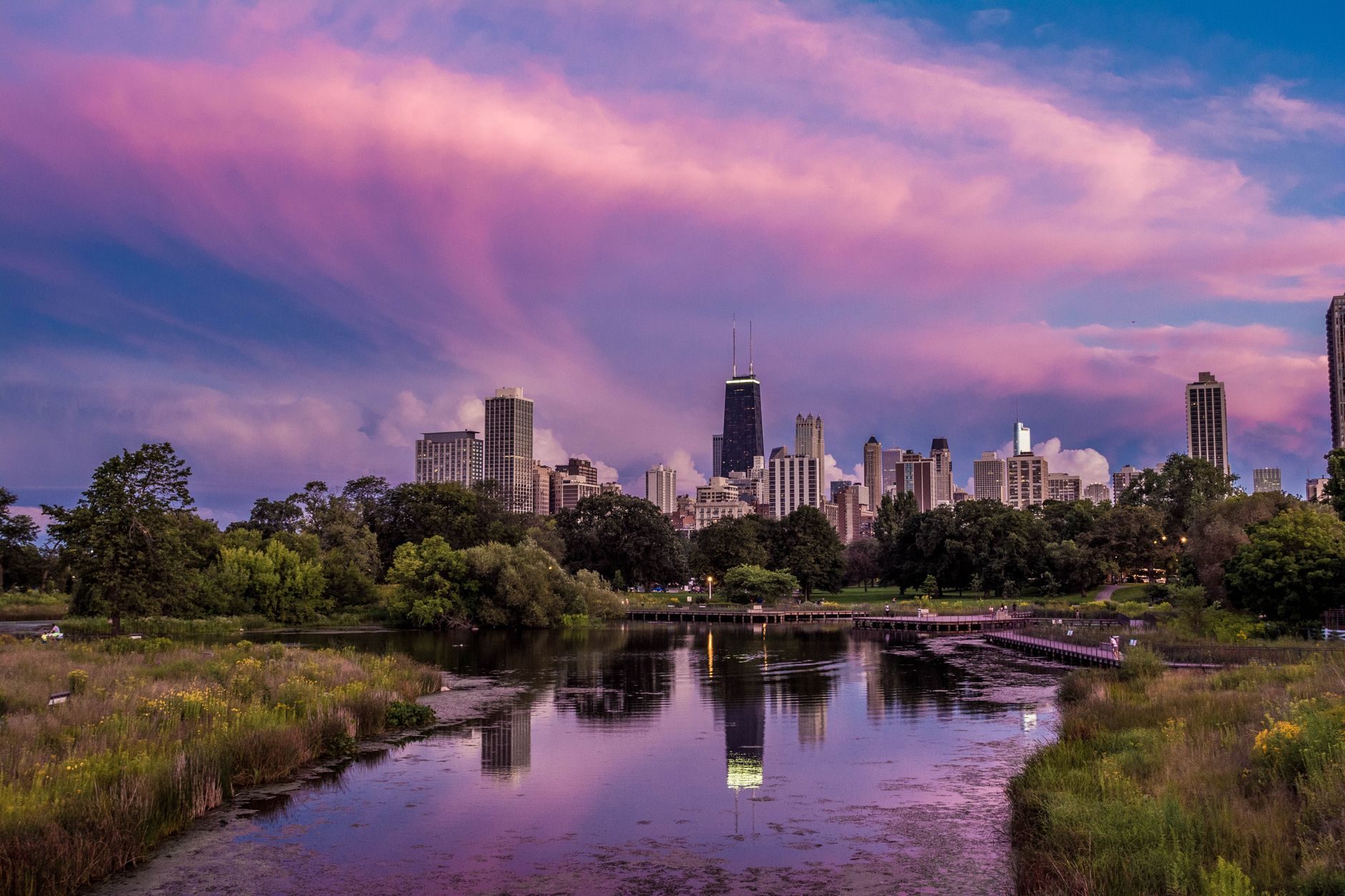
Andersonville · Cook County · IL
Condos for sale in
Andersonville.
- Active listings
- 0
- Median list
- $0
- Avg time on market
- 0 days
- Sold · last year
- 10
Active listings
0 homes on the market
No homes match these filters.
No active listings in this community right now. Want to be the first to know when one hits the market?
Beat the rest of the buyers
Be the first to know when a new Andersonville home hits the market
Save the search and you will get a text and an email the moment a new listing matches. Most Andersonville homes go under contract in the first week, the buyers who win are the ones who saw it first.
About the community
Condos for sale in Andersonville.
Looking specifically for a condo or townhome in Andersonville? This page filters the full Andersonville market down to attached homes (condos and townhomes), with live prices, recent sales, and the building details that matter. The neighborhood rundown below is the same one every buyer here uses to get oriented. Andersonville is a neighborhood on Chicago's Far North Side, sitting mostly within the Edgewater community area with a portion extending into Uptown. North Clark Street is the neighborhood's commercial spine, and the Andersonville Commercial Historic District runs from 4800 to 5800 North Clark Street across the Uptown and Edgewater areas. The neighborhood traces its name to the Andersonville School, built in 1854, and in the 1960s the local Clark Street business association lobbied the city to formalize the Andersonville name. The area is defined by deep Swedish American roots, anchored by the Swedish American Museum at 5211 North Clark Street, founded in 1976 and moved to its current location in 1987. At one time Chicago held more Swedes than any city outside Stockholm. The housing stock is a mix of Chicago greystones, brick two-flats and three-flats, single-family homes, and condos, with many greystones still lining residential streets. Andersonville is widely recognized for its dense network of locally owned, independent businesses and for being home to one of Chicago's largest LGBTQ communities. Transit access comes from the CTA Red Line at the Berwyn and Bryn Mawr stations, both rebuilt and reopened in July 2025, plus several bus routes. Recent housing prices have run well above the citywide median, with the neighborhood median sale price reported around 625,000 dollars.
At a glance
Location and community area
Andersonville is on Chicago's Far North Side, mostly within the Edgewater community area with a part extending into Uptown.
Housing character
The neighborhood features Chicago greystones, brick two-flats and three-flats, single-family homes, and condos, with greystones common on residential streets.
Walk Score
Andersonville is rated very walkable, with a Walk Score around 89, meaning most errands can be done on foot.
Median home price
Redfin reported a neighborhood median sale price of about 625,000 dollars, well above the citywide median.
Swedish heritage
The Swedish American Museum at 5211 North Clark Street, founded in 1976, anchors the neighborhood's enduring Swedish cultural identity.
Independent business district
Clark Street hosts one of Chicago's largest networks of locally owned, independent businesses, often called the shop local capital of Chicago.
LGBTQ-friendly reputation
Andersonville is home to one of Chicago's largest LGBTQ communities and is known for its inclusive, community-focused venues.
Transit
The CTA Red Line serves the area at the Berwyn and Bryn Mawr stations, both reconstructed and reopened in July 2025.
What it’s actually like to live here
Daily life in Andersonville centers on Clark Street, the neighborhood's walkable main artery lined with locally owned boutiques, specialty shops, restaurants, and bars. The neighborhood is recognized as the shop local capital of Chicago for its dense network of independent businesses, and its very high Walk Score, around 89, reflects how easily residents can handle errands on foot. The CTA Red Line at the Berwyn and Bryn Mawr stations, both rebuilt and reopened in July 2025, connects residents to downtown, supplemented by several bus routes. Clark Street's dining and nightlife range from longtime institutions like Hopleaf Bar and Simon's Tavern to the feminist landmark bookstore Women and Children First.
The housing market skews higher than the city overall, with Redfin reporting a neighborhood median sale price around 625,000 dollars against a citywide median near 379,900 dollars, reflecting Andersonville's desirability. Homes range from greystones and brick two-flats and three-flats to single-family houses and condos. Nearby green space includes Berger Park, a roughly 3.46-acre lakefront park on Sheridan Road with two historic mansions and a cultural center. The neighborhood draws a diverse mix of residents, including families, professionals, and one of Chicago's largest LGBTQ communities, all within a community known for inclusivity and locally rooted character.
Around town
What there is to do in Andersonville.
A handful of the places people who live here actually use. Not a directory.
- Culture
Swedish American Museum
A three-story Clark Street museum founded in 1976 that tells the story of Swedish emigration and Swedish American life through a collection of roughly 12,000 objects.
- Shopping
Andersonville Clark Street Business District
Clark Street's dense network of locally owned shops, restaurants, and businesses, often called the shop local capital of Chicago.
- Shopping
Women and Children First
One of the largest and longest-standing feminist bookstores in the country, founded in 1979 and located at 5233 North Clark Street.
- Food & Drink
Hopleaf Bar
A craft-beer mecca and relaxed neighborhood gastropub at 5148 North Clark Street, serving since 1992 with dozens of taps.
- Food & Drink
Simon's Tavern
A 90-year Andersonville institution at 5210 North Clark Street, founded by a Swedish immigrant and famous for its warm Swedish glogg.
- Parks
Berger Park
A roughly 3.46-acre lakefront park on Sheridan Road with two historic mansions and the North Lakeside Cultural Center.
By the numbers
Andersonville taxes + market stats.
Property tax rates vary by exact township and assessor district. Confirm per address before pricing a purchase.
Median sold price
$494,975
MRED · last 12 mo (10 sales)
How Andersonville got here
A bit of history.
In the 1840s and 1850s, the area that would become Andersonville was a sparsely populated farming community, with a large cherry orchard east of Clark Street and along Foster Avenue covering roughly thirty-eight acres. The neighborhood's name traces to the Andersonville School, built in 1854, and proximity to Chicago drew Swedish immigrants to the area beginning in the 1850s. After the Great Chicago Fire of 1871, the city banned wooden home construction, which pushed Swedish immigrants who could not afford stone or brick to settle further north, and many eventually moved to the Clark and Foster area. The first Chicago greystones appeared in the 1880s after the fire code banned wood construction, and many of these greystones remain on Andersonville's residential streets today. In the 1960s, the Clark Street business association successfully lobbied the city to formally name the neighborhood Andersonville in honor of its school and Swedish history.
Swedish heritage remains central to the neighborhood's identity. The Swedish American Museum was founded in 1976 and moved to its current three-story building at 5211 North Clark Street in 1987, holding a collection of roughly 12,000 objects. Andersonville annually hosts Midsommarfest, a Swedish-inspired summer street festival along Clark Street that has run for decades, along with Santa Lucia and a Julmarknad Christmas market. Over recent decades, Andersonville evolved from its Swedish working-class beginnings into a hub of locally owned independent businesses and one of Chicago's largest LGBTQ communities, blending its heritage with a reputation for inclusivity and a thriving Clark Street commercial corridor.
The questions buyers actually ask
Andersonville FAQ
The questions I get most from buyers shopping Andersonville. If yours isn't here, text 224-385-8779, same-day reply.
- What kinds of homes does Andersonville have?
- Andersonville's housing stock blends Chicago greystones, brick two-flats and three-flats, single-family homes, and condos. Many greystones still line the neighborhood's residential streets, a legacy of post-fire building codes that banned wood construction. The greystone form became popular in Chicago in the 1880s after the fire code took effect. This mix gives buyers options ranging from vintage multi-unit buildings to single-family houses.
- How is the commute downtown?
- Andersonville is on the Far North Side, roughly seven miles north of the Loop, and is served by the CTA Red Line at the Berwyn and Bryn Mawr stations. Both stations were fully reconstructed and reopened to riders in July 2025 as part of the Red and Purple Modernization project. Several bus routes supplement rail service. The Red Line provides a direct rail connection toward downtown Chicago.
- How walkable is Andersonville, and what is the dining and shopping like?
- Andersonville is very walkable, with a Walk Score around 89, meaning most errands can be accomplished on foot. Clark Street is the commercial spine, lined with locally owned boutiques, specialty shops, restaurants, and bars. The neighborhood is recognized as the shop local capital of Chicago for its large network of independent businesses. Longtime spots include Hopleaf Bar, Simon's Tavern, and the bookstore Women and Children First.
- What is the neighborhood's heritage and character?
- Andersonville has deep Swedish American roots dating to the 1850s, when Swedish immigrants settled near Clark and Foster. The Swedish American Museum at 5211 North Clark Street anchors that heritage, and the neighborhood hosts the annual Midsommarfest street festival. Over recent decades, Andersonville also became home to one of Chicago's largest LGBTQ communities and is known for its inclusive, community-focused character. The result is a neighborhood that blends Swedish tradition with independent, locally rooted culture.
- How affordable is Andersonville?
- Andersonville's home prices run well above the citywide average. Redfin has reported a neighborhood median sale price around 625,000 dollars, compared with a citywide median near 379,900 dollars. The higher pricing reflects the neighborhood's desirability, walkability, and strong commercial district. Buyers should expect a premium relative to many other Chicago neighborhoods.
- What community area is Andersonville in?
- Andersonville is not its own official Chicago community area. It sits mostly within the Edgewater community area, with a portion extending into Uptown. The Andersonville Commercial Historic District runs along Clark Street from 4800 to 5800 North, spanning both the Uptown and Edgewater areas, and it was added to the National Register of Historic Places in March 2010. Clark Street serves as the neighborhood's main spine.
- Is Andersonville family-friendly and LGBTQ-friendly?
- Andersonville draws a diverse mix of residents, including families, professionals, and one of Chicago's largest LGBTQ communities. The neighborhood is widely recognized for its inclusivity and community-focused venues. Local institutions like the bookstore Women and Children First and the Swedish American Museum offer programming for a range of ages and interests. Nearby Berger Park adds lakefront green space and a cultural center.
- Who is the real estate agent for Andersonville?
- Joe Keegan is the local licensed Illinois real estate broker who covers Andersonville in Andersonville, IL through Subdiview, a neighborhood-first home search for the Chicago suburbs and collar counties. Joe prices and negotiates from the live MRED sold comps for Andersonville specifically, not national averages, and can help you buy or sell here. Reach Joe at 224-385-8779 or joe@joekeeganhomes.com.
Nearby
Neighborhoods near Andersonville.
If you’re cross-shopping the area, these are the neighborhoods right next to Andersonville.
Your local agent
Joe knows Andersonville
Most agents will list anything. I focus on the places I actually know, and the things that move value here don't show up in the MLS write-up: which streets and buildings hold demand, what the HOA or assessments really cover, how the comps read once you account for condition and location, and where buyers consistently want to be.
When you're ready to tour or list, you want someone who has read the last 50 closed comps in this specific market, not a national average, and can tell you what they actually mean for your price. That's how I work. Text or call any time, and I'll give you a real take, not a brochure.
- Licensed Illinois broker
- Comp-driven pricing
- Andersonville specialist
- Honest local market take
- Brokerocity
Thinking of selling?
What's your home actually worth?
Not a Zestimate. A real CMA from someone who's sold this neighborhood, knows the floor plan premiums, and can tell you which upgrades the buyer pool here actually pays for.
- Pricing range with comp-by-comp logic
- Pre-list improvements that pay back, and the ones that don't
- No obligation, no spam, no auto-dialer