Aurora · Kane County · IL
Homes for sale in
Country Club Estates.
- Active listings
- 1
- Median list
- $455K
- Avg time on market
- 36 days
- Sold · last year
- 2
Active listings
1 home on the market

Beat the rest of the buyers
Be the first to know when a new Country Club Estates home hits the market
Save the search and you will get a text and an email the moment a new listing matches. Most Country Club Estates homes go under contract in the first week, the buyers who win are the ones who saw it first.
About the community
A 1920s plat that finally got built in the 1950s.
Country Club Estates is a mid-century single-family neighborhood on Aurora's near west side, in Kane County, north of Prairie Street between roughly Edgelawn Drive and Gladstone Avenue. Fred J. Walsh platted it in May 1926 across roughly 89 acres of the Day family's farmland, naming it for the Aurora Country Club that had just finished assembling its course directly south. Then the lots sat. The Depression and the Second World War stalled the subdivision, and ownership of the unsold inventory passed from one Aurora bank trustee to the next for nearly three decades, with raw lots still selling out of the plat in 1955. When it finally filled in, it filled in with 1950s families in 1950s taste, which is why the housing here is overwhelmingly mid-century.
At a glance
Platted May 1926
Fred J. Walsh recorded 370 lots with the Kane County Recorder in May 1926, on farmland the Day family had worked since 1847.
Built out in the 1950s
The lots sat unsold through the Depression and the war, passing between Aurora bank trustees, and the neighborhood was built during the postwar boom.
Mid-century ranch archetype
Long low massing, brick veneer with cedar or timber above, deep overhanging eaves, picture windows, and attached garages, which were a genuine 1950s luxury.
Aurora Country Club on the south
The private club, founded 1914, sits directly across Prairie Street on a Bendelow and Langford course later reworked by A. W. Tillinghast. It is a permanent open buffer, not a membership benefit.
Aurora University next door
The campus borders the neighborhood on the east and northeast, bringing a library, a theater, gymnasium, and NCAA Division III athletics within walking distance.
No homeowners association
Typical for a 1926 plat, where control came through deed restrictions rather than an association. No dues, no architectural review, no shared amenities.
BNSF terminal a few miles east
The Aurora Transportation Center is the western terminal of Metra's BNSF line, 37.1 miles from Chicago Union Station.
What’s close
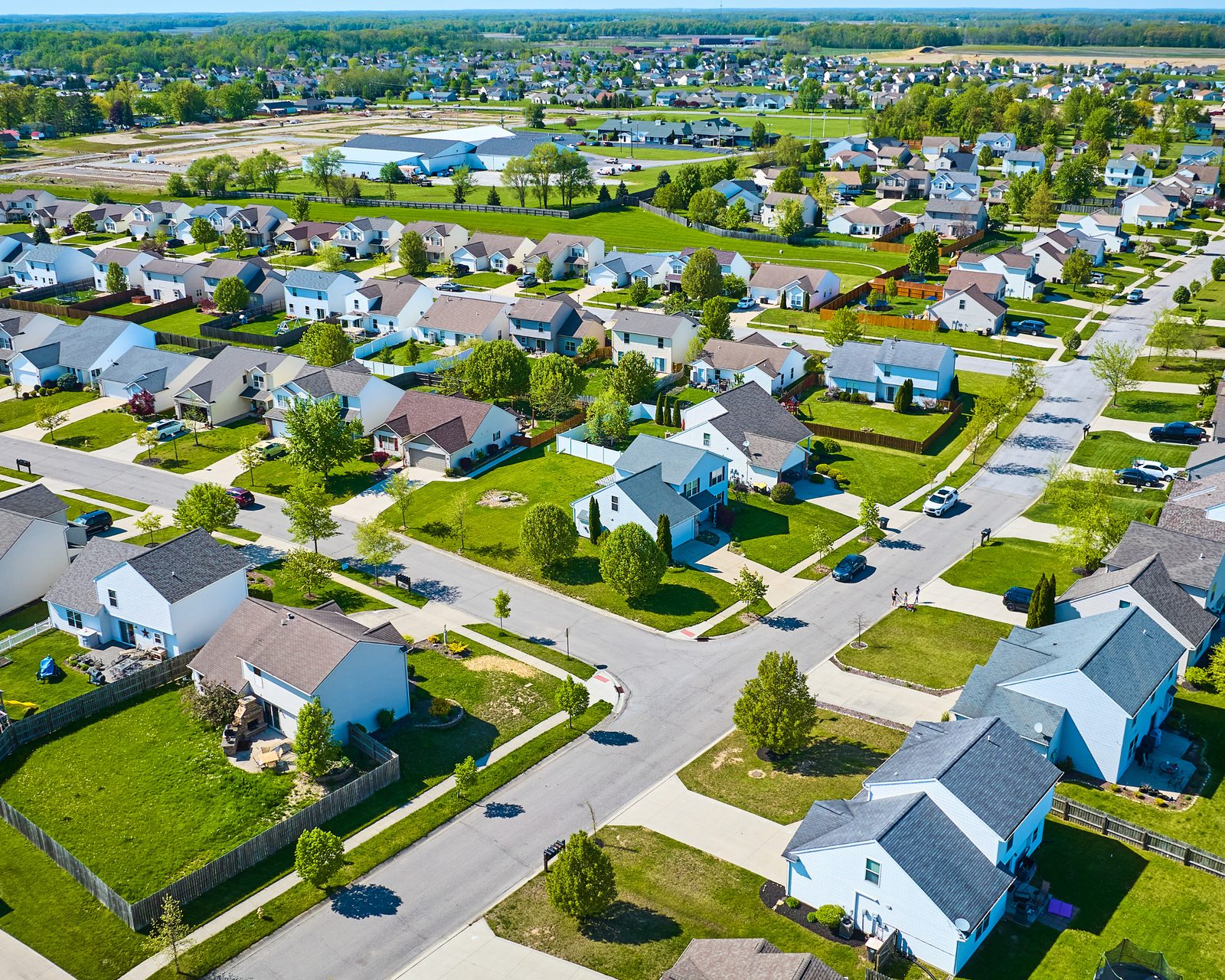
The neighborhood occupies a quiet residential grid on Aurora's near west side, between the country club to the south and Aurora University to the east.
- Highway
- Prairie Street forms the south edge, with Illinois Route 31 (Lake Street) about a mile east and Galena Boulevard a few blocks north. I-88 is roughly 10 to 15 minutes away via the Orchard Road or Farnsworth Avenue interchanges.
- Train
- The Aurora Transportation Center at 233 N. Broadway, about two and a half miles east, is the western terminal of the Metra BNSF line and a Pace bus hub. Runs to Union Station typically take roughly 65 to 80 minutes depending on express or local service.
- Schools
- West Aurora School District 129, not East Aurora 131, Indian Prairie 204, or Oswego 308. Freeman Elementary sits on South Randall Road at the edge of the neighborhood, then Washington Middle School and West Aurora High School. Confirm by address.
- Higher education
- Aurora University borders the neighborhood on the east and northeast, with Waubonsee Community College's Sugar Grove campus a short drive west.
- Downtown
- Downtown Aurora and the Paramount Theatre are about two miles east, along with RiverEdge Park, SciTech, and the Fox River riverwalk.
- Hospital
- Rush Copley Medical Center on Ogden Avenue, about five miles southeast, is the Fox Valley's primary hospital campus.
What it’s actually like to live here
Country Club Estates is what a 1920s speculative dream looks like after it waited thirty years to come true. Fred Walsh carved 370 lots out of the Day family's farm in May 1926, named the place for the golf club that had just finished building its course across Prairie Street, and then watched the whole thing sit. The Depression came, then the war, and the unsold lots passed from one Aurora bank trustee to the next. When the neighborhood finally got built, it got built by 1950s families in 1950s taste: long low ranch houses with brick on the bottom and cedar above, deep overhanging eaves, picture windows, attached garages, and the occasional two-story for a family that needed the room. The trees that went in with those houses are seventy years old now, and they are the first thing you notice driving in off Prairie Street.
The setting does a lot of quiet work. On the south you have the Aurora Country Club, roughly 130 acres of golf course that has been open ground since 1914 and is not going to be anything else. On the east you have Aurora University, whose campus grew north into the original plat over the decades and now supplies the neighborhood with green space, a library, a theater, and college sports within walking distance. In between is a plain, well-kept residential grid with sidewalks and no through traffic. Downtown Aurora, the Paramount Theatre, RiverEdge Park, and the Metra terminal are all inside three miles, which means you can live on a wide 1950s lot and still be on a train to Union Station after a short drive.
Now the honest part. This is 1950s housing stock with no HOA, and both halves of that sentence carry consequences. Homes of this age mean you should budget for the usual: aging furnaces and air conditioning, cast iron or galvanized plumbing in some houses, undersized or fuse-panel electrical service, single-pane windows, kitchens and baths that may still be original, and garages built for a 1957 sedan rather than a modern SUV. Some homes here have been beautifully and completely updated and some have not, and you will see both on the same block. With no association there are no dues, but also no architectural review and no shared amenities, so exterior upkeep is a matter of individual owner pride and it does vary. The golf course is a view and a buffer, not a benefit, because the club is private and membership does not come with the house. Kane County property taxes are steep, generally landing somewhere in the 2.1 to 2.7 percent range of market value, and the West Aurora school levy is the bulk of the bill. And there is no park inside the subdivision itself, so families walk or drive a few blocks to Fox Valley Park District facilities.
The questions buyers actually ask
Country Club Estates FAQ
The questions I get most from buyers shopping Country Club Estates. If yours isn't here, text 224-385-8779, same-day reply.
- What's the typical closing timeline?
- 30 to 60 days from accepted offer to keys. Cash deals can close in two weeks. Conventional financing is usually closer to 60.
- Does buying here come with membership at the Aurora Country Club?
- No. The neighborhood takes its name from the club because developer Fred J. Walsh platted it in 1926 right after the Aurora Country Club finished assembling its golf course land directly south across Prairie Street. The two have always been separate. Aurora Country Club is a private membership club with its own application process, and membership is not attached to, conveyed with, or discounted for any home in the subdivision. What residents actually get is the setting: a permanently open, mature golf course landscape bordering the neighborhood that will never be developed.
- Why were the homes built in the 1950s if the subdivision was platted in 1926?
- Because the lots did not sell. Walsh recorded 370 lots in May 1926 and conveyed them to a bank trustee that June, and then the Depression and the Second World War stopped everything. Ownership of the unsold inventory passed through a series of Aurora bank trustees over the following decades, and raw lots were still being sold out of the plat in January 1955. The neighborhood is a Roaring Twenties subdivision that finally got built during the postwar boom, which is exactly why the housing reads as mid-century rather than 1920s.
- Is there a homeowners association, and what are the dues?
- No homeowners association has been identified for Country Club Estates in Aurora, and listing data shows no association fee. That is typical for a subdivision platted in 1926, when developers controlled quality through restrictions written into individual deeds rather than through an association with dues. Deeds in this plat historically limited lots to single residence use and, in the 1950s, set a minimum construction cost. Practically, that means no monthly or annual dues, but also no shared amenities and no architectural review board. Confirm assessments on any specific property, since a small number of parcels in older Aurora neighborhoods carry special service area charges.
- What schools serve Country Club Estates?
- The neighborhood is in West Aurora School District 129, not East Aurora 131, Indian Prairie 204, or Oswego 308, all of which serve other parts of Aurora. Most of the neighborhood is assigned to Freeman Elementary, which sits on South Randall Road right at the edge of the subdivision, then Washington Middle School, since the district's published feeder list runs Freeman into Washington, then West Aurora High School, the district's only high school. Attendance boundaries change and the edges of this neighborhood are ambiguous, so confirm your specific address with District 129 before making a decision based on schools.
- What should I inspect in a home of this age?
- Most homes here date to the mid and late 1950s, so have your inspector pay attention to the age of the furnace and air conditioning, the electrical panel and service capacity, supply and drain plumbing material, window condition, the sewer line, and original kitchen and bath systems. Many homes have already been updated and some have not, and the difference shows up in the price. The construction quality is generally good: these were custom and semi-custom houses with real masonry, hardwood, and generous lots, and original 1950s deed conditions on some lots set a minimum construction cost well above entry level for the time.
- What do homes cost here and how is the market moving?
- Prices in Country Club Estates vary more than in a tract subdivision, because these were custom and semi-custom homes built lot by lot in the 1950s and they have been updated to very different degrees since. Rather than quote a stale number, check the Market snapshot on this page, which pulls current active listings, recent sales, and days on market straight from the MLS and updates automatically.
- Who is the real estate agent for Country Club Estates?
- Joe Keegan is the local licensed Illinois real estate broker who covers Country Club Estates in Aurora, IL through Subdiview, a neighborhood-first home search for the Chicago suburbs and collar counties. Joe prices and negotiates from the live MRED sold comps for Country Club Estates specifically, not national averages, and can help you buy or sell here. Reach Joe at 224-385-8779 or joe@joekeeganhomes.com.
Your local agent
Joe knows Country Club Estates
Most agents will list anything. I focus on the places I actually know, and the things that move value here don't show up in the MLS write-up: which streets and buildings hold demand, what the HOA or assessments really cover, how the comps read once you account for condition and location, and where buyers consistently want to be.
When you're ready to tour or list, you want someone who has read the last 50 closed comps in this specific market, not a national average, and can tell you what they actually mean for your price. That's how I work. Text or call any time, and I'll give you a real take, not a brochure.
- Licensed Illinois broker
- Comp-driven pricing
- Aurora specialist
- Honest local market take
- Brokerocity
Market snapshot
Country Club Estates, by the numbers
Live MRED data, refreshed daily. The numbers below tell you what this market is doing today, not what Zillow's algorithm thinks it might be doing six weeks from now.
Typical list price
$455,000
Homes for sale right now
1
Avg time on market
36 days
Sold in the last year
2
This representation is based in whole or in part on data supplied by Midwest Real Estate Data, LLC for the period October 1, 2025 through October 1, 2026. Midwest Real Estate Data, LLC does not guarantee nor is it in any way responsible for its accuracy. Data maintained by Midwest Real Estate Data LLC may not reflect all real estate activity in the market.
Thinking of selling?
What's your home actually worth?
Not a Zestimate. A real CMA from someone who's sold this neighborhood, knows the floor plan premiums, and can tell you which upgrades the buyer pool here actually pays for.
- Pricing range with comp-by-comp logic
- Pre-list improvements that pay back, and the ones that don't
- No obligation, no spam, no auto-dialer
Schools serving Country Club Estates
Where Country Club Estates homes go to school
Homes in Country Club Estates are most often zoned to West Aurora HS. Open a school to see its area, the district, and every home for sale that feeds it.
School assignment is derived from the school the MRED listing agent entered and is not a guarantee. Always verify current attendance boundaries with the district before writing an offer.
Other communities