Harwood Heights · Cook County · IL
Homes for sale in
Harwood Heights.
- Active listings
- 13
- Median list
- $429K
- Avg time on market
- 8 days
- Sold · last year
- 69
Active listings
13 homes on the market


Be the first to know when a new Harwood Heights home hits the market
Text + email the moment a new listing matches.
About the community
Living in Harwood Heights.
Harwood Heights is a village in Cook County, Illinois, with a population of 9,065 at the 2020 census. Located roughly 14 miles northwest of the Chicago Loop, it and its neighbor Norridge form a unique enclave that is completely surrounded by the City of Chicago. Covering just 0.83 square miles, the village is densely built with single-family homes, condominiums, and a commercial spine along Harlem Avenue (Illinois Route 43). It sits a short distance south of the Kennedy Expressway and the Harlem CTA Blue Line O'Hare branch station, giving residents fast rail and highway access to both downtown Chicago and O'Hare International Airport. The community has deep Italian and Polish roots, an active senior population, and the historic Ridgemoor Country Club within its borders.
At a glance
~9,065 residents
About 9,065 residents at the 2020 census in a compact 0.83-square-mile village.
A Chicago enclave
Together with Norridge, the village is entirely surrounded by the City of Chicago.
Ridgewood High School District 234
Ridgewood High School, the Rebels, serves Harwood Heights and Norridge and opened in 1960.
CTA Blue Line access
Served by CTA buses, with the Harlem Blue Line (O'Hare branch) station just north for rapid transit downtown and to the airport.
Ridgemoor Country Club
A historic private golf club founded in the early 1900s sits on the ridge that was the area's first settled high ground.
~$400,000 home values
The typical Harwood Heights home value is about $400,000 as of 2026, per Zillow.
Chartered in 1948
Officially chartered March 4, 1948, after a 1947 incorporation vote led by founder Herbert Huening.
Italian and Polish roots
A Harlem Avenue corridor with 25-plus restaurants reflects deep Italian, Polish, and broadly European heritage.
What’s close
Harwood Heights sits in Norwood Park Township in northwest Cook County, about 14 miles from the Chicago Loop and roughly 7 miles from O'Hare International Airport. Its main commercial corridor runs along Harlem Avenue, a short distance south of the Kennedy Expressway.
- Harlem Avenue corridor
- Harlem Avenue (Illinois Route 43) is the main business corridor; Lawrence, Foster, and Montrose Avenues are major cross streets.
- Kennedy Expressway (I-90)
- The Kennedy runs just north of the village for direct routes downtown and to O'Hare.
- CTA transit
- CTA buses serve the major streets in all directions; the Harlem Blue Line (O'Hare branch) station provides rapid transit nearby.
- Schools
- Served by Ridgewood High School District 234 plus elementary districts Union Ridge 86, Pennoyer 79, and Norridge 80.
- Ridgemoor Country Club
- A historic private golf and social club lies within the village on Gunnison Street.
- Township
- Located in Norwood Park Township and within the Triton Community College District 504.
What it’s actually like to live here
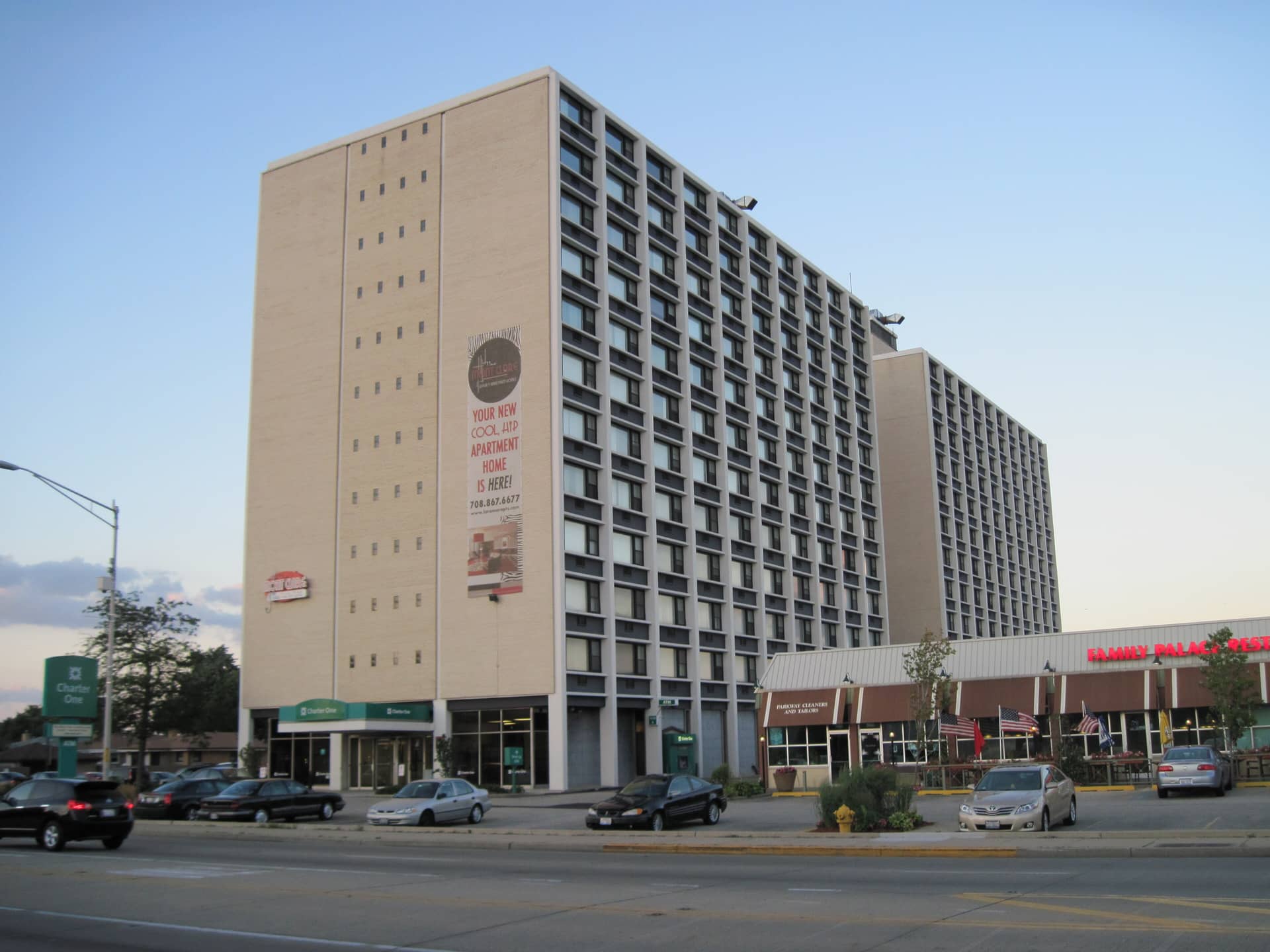
Harwood Heights offers a dense, walkable mix of mid-century single-family homes, newer condominiums, and townhomes, plus high-rise condo living that dates back to the early 1960s. The typical home value is around $400,000 as of 2026, which keeps it more attainable than many North Shore suburbs while still inside the Chicago enclave. Property taxes are a real cost factor: the median property tax rate is about 1.73 percent, producing a typical annual bill near $5,071. Illinois homeowner exemptions can reduce the bill.
Daily life centers on the Harlem Avenue corridor, where the village reports more than 25 restaurants and several shopping centers anchored by an Italian, Polish, and broadly European food scene. Commuting is a strong selling point: O'Hare is roughly 7 miles away, about a 10-minute drive, and the Chicago Loop is about 14 miles, typically 25 to 35 minutes by car, with the nearby Harlem Blue Line offering a one-seat rail ride to both. The village also maintains parks, a recreation program, and the Eisenhower Public Library, and the Ridgemoor Country Club provides golf and social amenities.
Neighborhoods
Detailed Harwood Heights community pages coming soon.
Browse the listings above. Detailed neighborhood pages with market stats, school info, and lifestyle take-downs land here as we roll them out.
Schools
Districts serving Harwood Heights.
Boundary lines do shift. Always confirm in writing for a specific address before writing an offer.
- D234Grades 9-12
Ridgewood Community High School District 234
Schools serving the area
- Ridgewood High School (Norridge)
A single-high-school district jointly serving Harwood Heights, Norridge, and unincorporated Norwood Park Township. Home of the Rebels, opened 1960.
- D86Grades Pre-K-8
Union Ridge School District 86
Schools serving the area
- Union Ridge School (Harwood Heights)
A one-school district serving parts of Harwood Heights and Norridge. Union Ridge School is a recognized Blue Ribbon School. Confirm per address.
- D79Grades Pre-K-8
Pennoyer Elementary School District 79
Schools serving the area
- Pennoyer School (Norridge)
A single-school district serving parts of Norridge, Harwood Heights, and unincorporated Norwood Park Township. Norridge SD 80 also serves a portion of the village.
Around town
What there is to do in Harwood Heights.
A handful of the places people who live here actually use. Not a directory.
- Parks
Oriole Park
A neighborhood park popular for its walking and running track, open green space, and dog walking.
- Culture
Ridgemoor Country Club
A historic private golf and social club, established in the early 1900s, on the ridge that was the area's first settled high ground.
- Culture
Eisenhower Public Library District
The community library serving Harwood Heights and Norridge, founded in 1968 and located at 4613 N. Oketo Avenue.
- Food & Drink
RoccoVino's Italian Restaurant
A long-running family Italian restaurant representative of the village's strong Italian dining tradition.
- Food & Drink
Rex Italian Foods
A specialty Italian grocer and deli well known to the local Italian-American community.
- Shopping
Harlem Avenue shopping centers
Several Harlem Avenue retail centers anchor the village's main commercial corridor with grocery, dining, and services.
Getting around
Commute + transit from Harwood Heights.
- Routes: Harlem Avenue (IL Route 43) · Kennedy Expressway (I-90) · Lawrence Avenue · Montrose Avenue
- O'Hare Airport: ~12 min
- Chicago Loop: ~30 min
By the numbers
Harwood Heights taxes + market stats.
Property tax rates vary by exact township and assessor district. Confirm per address before pricing a purchase.
Property tax rate
1.73%
effective avg
Sales tax
10.25%
combined
Median sold price
$382,000
MRED · last 12 mo (69 sales)
Median household income
$81,086
ACS
How Harwood Heights got here
A bit of history.
The land that became Harwood Heights was originally home to the Potawatomi and later, in the 1830s, to the area's first European settler, Israel Smith, who built atop a ridge where Ridgemoor Country Club and St. Rosalie's Church now stand. Farms gradually gave way to residential development through the early 20th century. After World War II, residents frustrated by muddy unpaved streets, no police protection, and poor water service first sought annexation by Chicago, but the city declined to take in the small cluster of homes. Navy veteran Herbert Huening then led an incorporation drive, and in the fall of 1947 voters cast 350 ballots for incorporation. Harwood Heights received its official charter on March 4, 1948, with a population of about 400, and Huening was elected its first mayor.
The 1950s brought the village's most rapid growth as former servicemen moved their young families out of the city. Areas south of Lawrence Avenue were annexed in 1951, and additional land east of Harlem was added in 1956 and 1957. In 1958 residents of Harwood Heights and Norridge voted to create a high school district, and Ridgewood High School (its name combining "Nor-ridge" and "Har-wood") opened in 1960. The Eisenhower Public Library began in 1968. The village name itself is believed to combine "Har" from Harlem Avenue with "wood" from Norwood Park Township, though its exact origin remains uncertain.
The questions buyers actually ask
Harwood Heights FAQ
The questions I get most from buyers shopping Harwood Heights. If yours isn't here, text 224-385-8779, same-day reply.
- What schools serve Harwood Heights?
- High schoolers attend Ridgewood High School in District 234, a single-high-school district shared with Norridge that opened in 1960. At the elementary level the village is split among Union Ridge School District 86, Pennoyer School District 79, and Norridge School District 80, so the assigned grade school depends on your address. Union Ridge School is a nationally recognized Blue Ribbon School. Confirm boundaries per address before writing an offer.
- How is the commute to downtown Chicago and O'Hare?
- Downtown Chicago is about 14 miles away, roughly a 25 to 35 minute drive depending on traffic, while O'Hare International Airport is only about 7 miles, around 10 minutes by car. The nearby Harlem CTA Blue Line station offers a one-seat train ride to both the Loop and O'Hare, and CTA buses run along the main streets. There is no Metra station in the village.
- What are property taxes like in Harwood Heights?
- The median property tax rate is about 1.73 percent, which produces a typical annual bill of roughly $5,071. That is higher than the national median but reflects Cook County's overall tax structure, and Illinois homeowner exemptions can reduce the bill. Always confirm the actual bill for a specific address.
- How affordable is housing here?
- The typical home value is around $400,000 as of 2026, with housing stock ranging from mid-century single-family homes to condos and townhomes. That is generally more attainable than many North Shore suburbs while keeping you inside the Chicago enclave with quick access to O'Hare and the Loop.
- Why is Harwood Heights surrounded by Chicago?
- After World War II, residents first asked Chicago to annex the area, but the city declined to take in the small cluster of homes. Locals led by Herbert Huening then incorporated their own village, chartered in 1948, which is why Harwood Heights and Norridge today form an enclave entirely encircled by the City of Chicago.
- What is the sales tax rate when shopping in Harwood Heights?
- The combined sales tax rate is 10.25 percent, made up of 6.25 percent Illinois state tax, 1.75 percent Cook County, 1.25 percent village, and 1.0 percent for the Regional Transportation Authority.
- What makes Harwood Heights distinct?
- It is a small, dense, family-oriented village with deep Italian and Polish heritage, a lively Harlem Avenue dining and shopping corridor, and the historic Ridgemoor Country Club within its borders. Despite its small size it offers full suburban services while sitting minutes from both O'Hare and downtown Chicago.
- Who is the real estate agent for Harwood Heights?
- Joe Keegan is the local licensed Illinois real estate broker who covers Harwood Heights in Harwood Heights, IL through Subdiview, a neighborhood-first home search for the Chicago suburbs and collar counties. Joe prices and negotiates from the live MRED sold comps for Harwood Heights specifically, not national averages, and can help you buy or sell here. Reach Joe at 224-385-8779 or joe@joekeeganhomes.com.
Nearby
Towns next to Harwood Heights.
If you’re cross-shopping the area, these are the places that border Harwood Heights.
Your local agent
Joe knows Harwood Heights
Most agents will list anything. I focus on the places I actually know, and the things that move value here don't show up in the MLS write-up: which streets and buildings hold demand, what the HOA or assessments really cover, how the comps read once you account for condition and location, and where buyers consistently want to be.
When you're ready to tour or list, you want someone who has read the last 50 closed comps in this specific market, not a national average, and can tell you what they actually mean for your price. That's how I work. Text or call any time, and I'll give you a real take, not a brochure.
- Licensed Illinois broker
- Comp-driven pricing
- Harwood Heights specialist
- Honest local market take
- Brokerocity
Thinking of selling?
What's your home actually worth?
Not a Zestimate. A real CMA from someone who's sold this neighborhood, knows the floor plan premiums, and can tell you which upgrades the buyer pool here actually pays for.
- Pricing range with comp-by-comp logic
- Pre-list improvements that pay back, and the ones that don't
- No obligation, no spam, no auto-dialer